
Japan’s Depopulated-Area-Designation policy linked to population decline in small and medium-sized cities
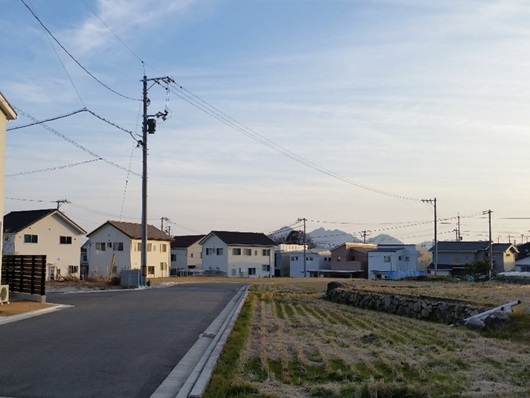
Title: Small-sized cities facing decline
Caption: Japan’s Depopulated-Area-Designation policy was associated with population and employment declines around 20 years after designation.
Credit: Osaka Metropolitan University
Small and medium-sized cities (SMCs) are essential for balanced national development, yet many are now facing prolonged population loss, aging, and weakened labor markets. Japan has addressed this challenge for more than half a century through the Depopulated-Area-Designation (DAD) policy, a national framework that identifies municipalities facing population loss and supports them through infrastructure, fiscal, industrial, and social measures. However, it has not been determined whether such a designation can stabilize shrinking communities over time.
Associate Professor Haruka Kato at Osaka Metropolitan University’s Graduate School of Human Life and Ecology evaluated the long-term effects of the DAD policy on Japanese SMCs. The study analyzed data from 1980 to 2020 for 1,561 SMCs with populations of approximately 200,000 or fewer, comparing 771 designated municipalities with 790 non-designated municipalities. Using a staggered difference-in-differences approach, the analysis estimated the effects of DAD designation on total population, total employed persons, and employed residents working within their municipality of residence.
The results showed no statistically significant average effect on population or employment over the post-designation period. However, the event-study analysis revealed an important pattern of delay. For about 15 years after designation, no statistically significant effect of designation on population was detected, but at around 20 years after, designated municipalities began to show significant population decline, and the number of employed persons followed a similar downward trajectory. By contrast, employed residents working within their own municipality did not show the same aggregate decline. These findings suggest that designation alone cannot reverse, or even stabilize, the structural decline facing many SMCs.
“DAD policy was created to support communities confronting depopulation, but our results show that long-term dependence on designation-based policy may not be enough,” said Dr. Kato. “Shrinking cities need smart decline strategies that place residents’ quality of life, sustainable services, and community resilience at the center.”
The findings were published in Cities.
Funding
Haruka Kato received funding from the Japan Society for the Promotion of Science (Grant No. 24K17421, 23K26284). The opinions, findings, conclusions, or recommendations expressed in this manuscript are those of the author.
Paper information
Journal: Cities
Title: Impact of depopulated area designation policy on the population and employment in Japanese Small and Medium-sized cities
DOI: 10.1016/j.cities.2026.107366
Authors: Haruka Kato
Publication date: 11 July 2026
URL: https://doi.org/10.1016/j.cities.2026.107366
Contact
Haruka Kato
Graduate School of Human Life and Ecology
E-mail: haruka-kato[at]omu.ac.jp
*Please change [at] to @.