Japan, as an island nation surrounded by the sea, has an inseparable connection between its people's lives and maritime transportation. Among its cities, Osaka is known as the “Aquatic City” due to its many rivers, and there was once a time when large shipyards lined its coastal areas. In such a historically significant maritime hub, the Department of Marine System Engineering at Osaka Metropolitan University has been engaged in the development, research, and education of shipbuilding technologies since its predecessor, the Department of Naval Architecture at Osaka Prefecture University.
Marine system engineering is a comprehensive field that encompasses research on marine transportation and the development of marine energy resources, and their safety and environmental impact. Our laboratory focuses on floating structures, including ships, underwater vehicles, and offshore resource development equipment. Our goal is to reduce environmental impact while enhancing design, development, performance, and operational support to ensure safe and efficient maritime use.
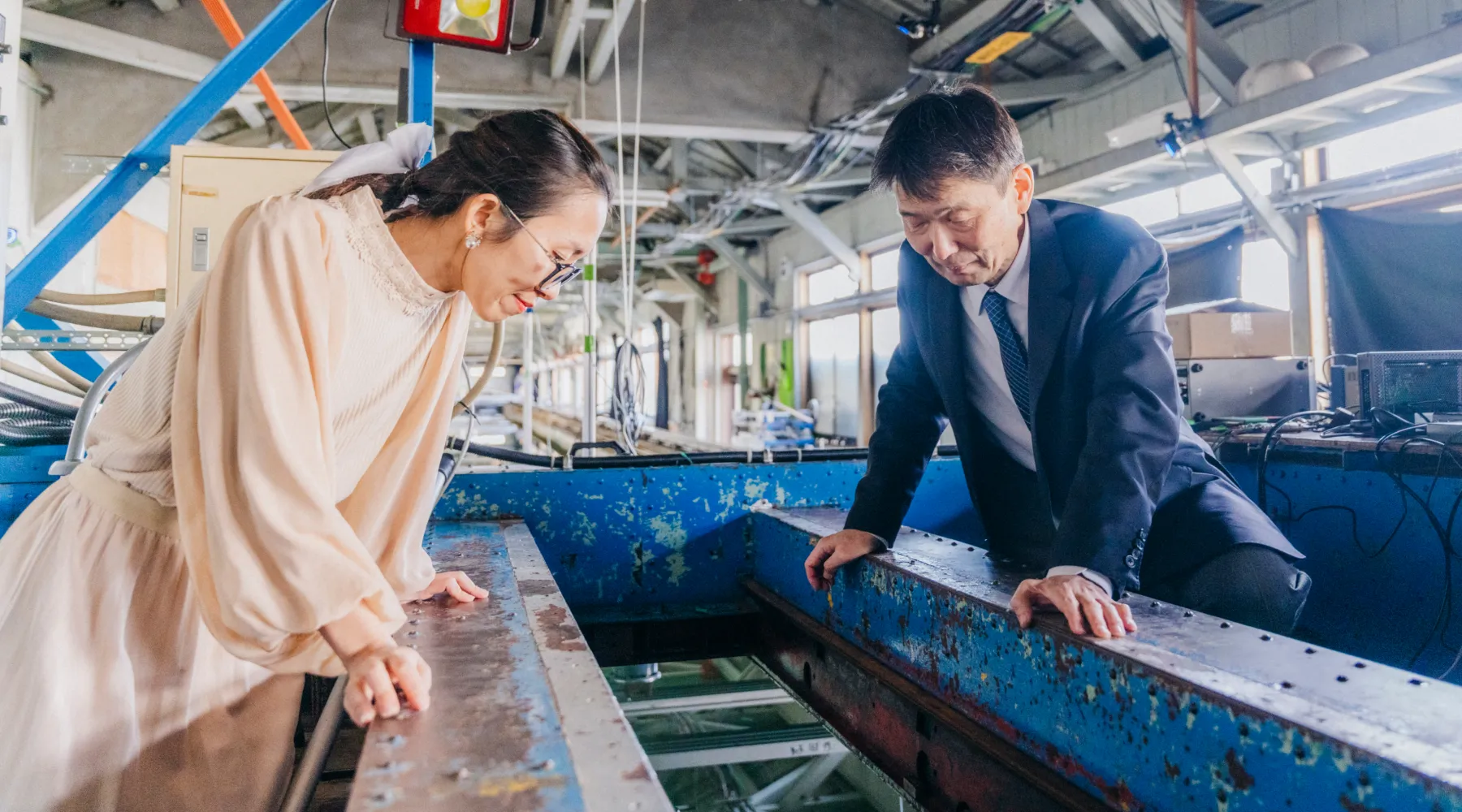
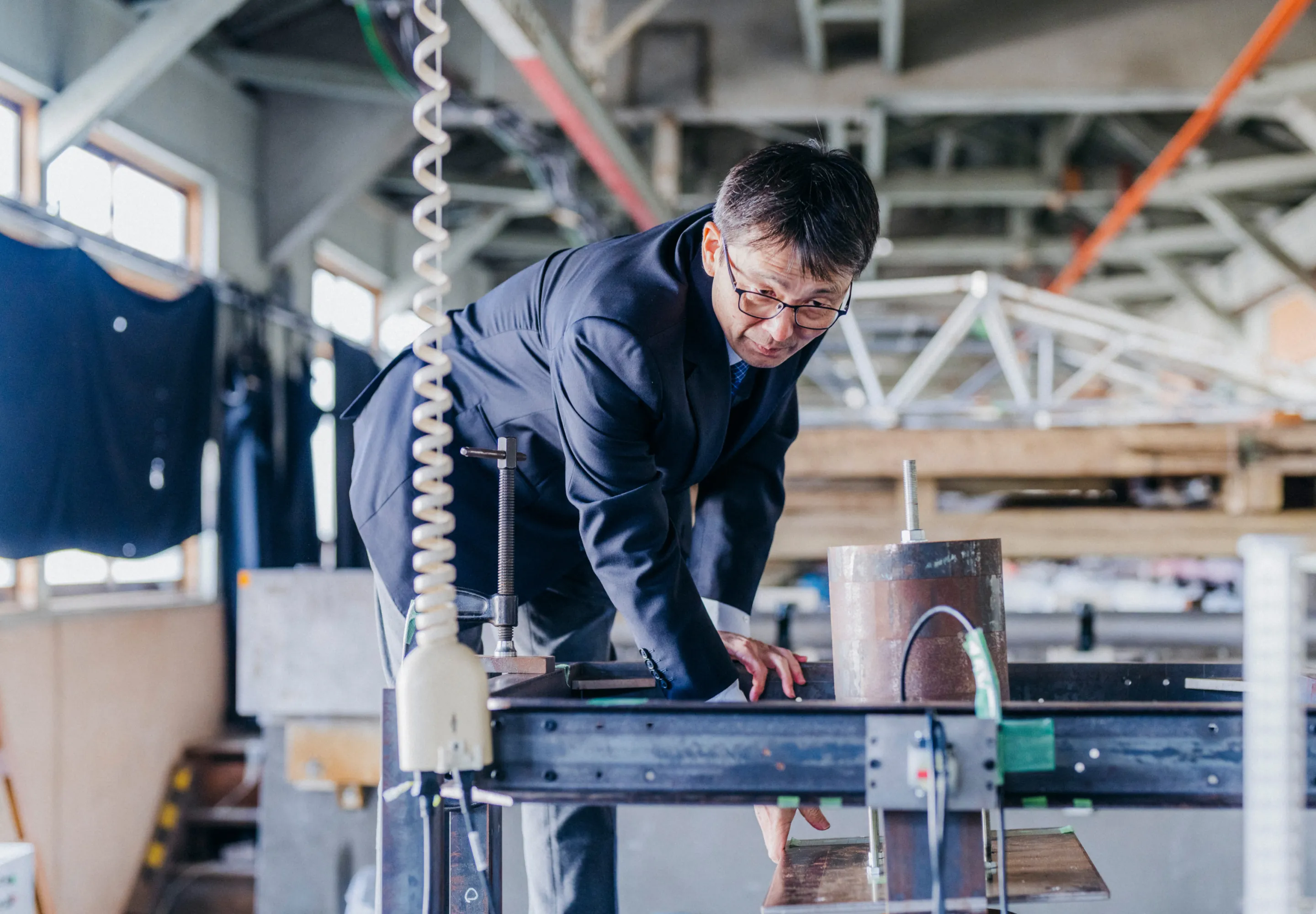
Our specific research areas include the development of experimental facilities and analytical methods for evaluating the motion and hydrodynamic performance of offshore floating structures. We also work on predictive and estimation techniques to assess these performances and optimize designs based on our evaluation methods.
In the past, offshore floating structures primarily referred to ships. However, in recent years, floating offshore wind turbines and wave energy converters have also become widely adopted. While stabilizing motion is crucial for improving the safety and comfort of ships, wave energy converters are designed to move significantly to maximize energy capture. This shift highlights the increasing diversity of required performance standards.
The field of marine system engineering has advanced through collaboration and dialogue among researchers worldwide, all striving toward a sustainable society. Our laboratory embraces this global approach by inviting guest professors annually and actively welcoming international students. Many of our students continue joint research after returning to their home countries, frequently holding online meetings to sustain these collaborations.
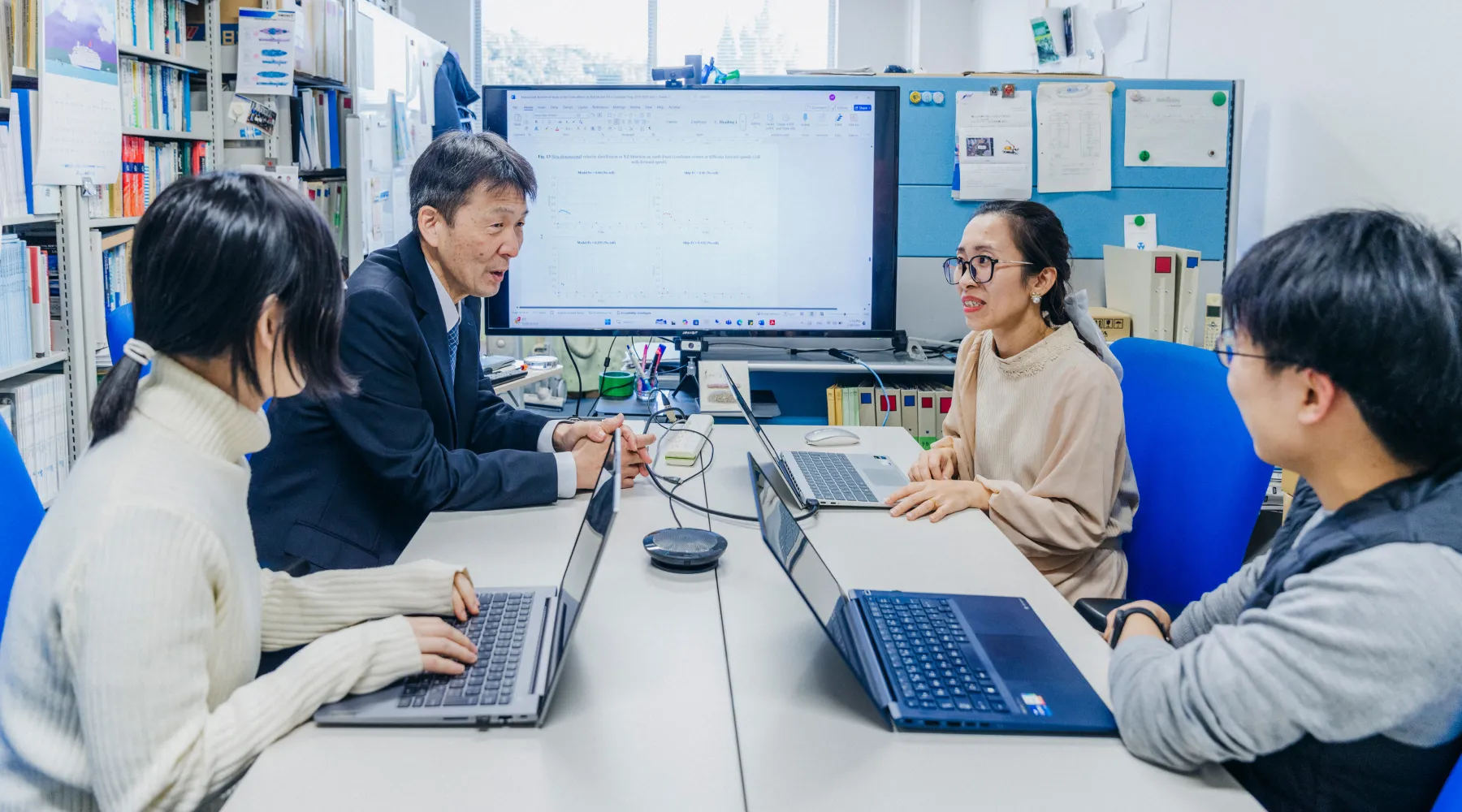
Many of the international students and researchers in our lab speak little or no Japanese, so we primarily communicate in English. As faculty members, we engage closely with each student while also facilitating frequent discussions among students through regular meetings.
Not all Japanese students in our lab are fluent in English, but as researchers share the same academic interests, communication remains effective. Through active discussions, students not only refine their research but also enhance their language skills.
Whether it’s about research or daily life, our entire laboratory is committed to supporting one another. If you are new to Japan, you can confidently take on the challenge of studying abroad, knowing that you will be well-supported throughout your journey.