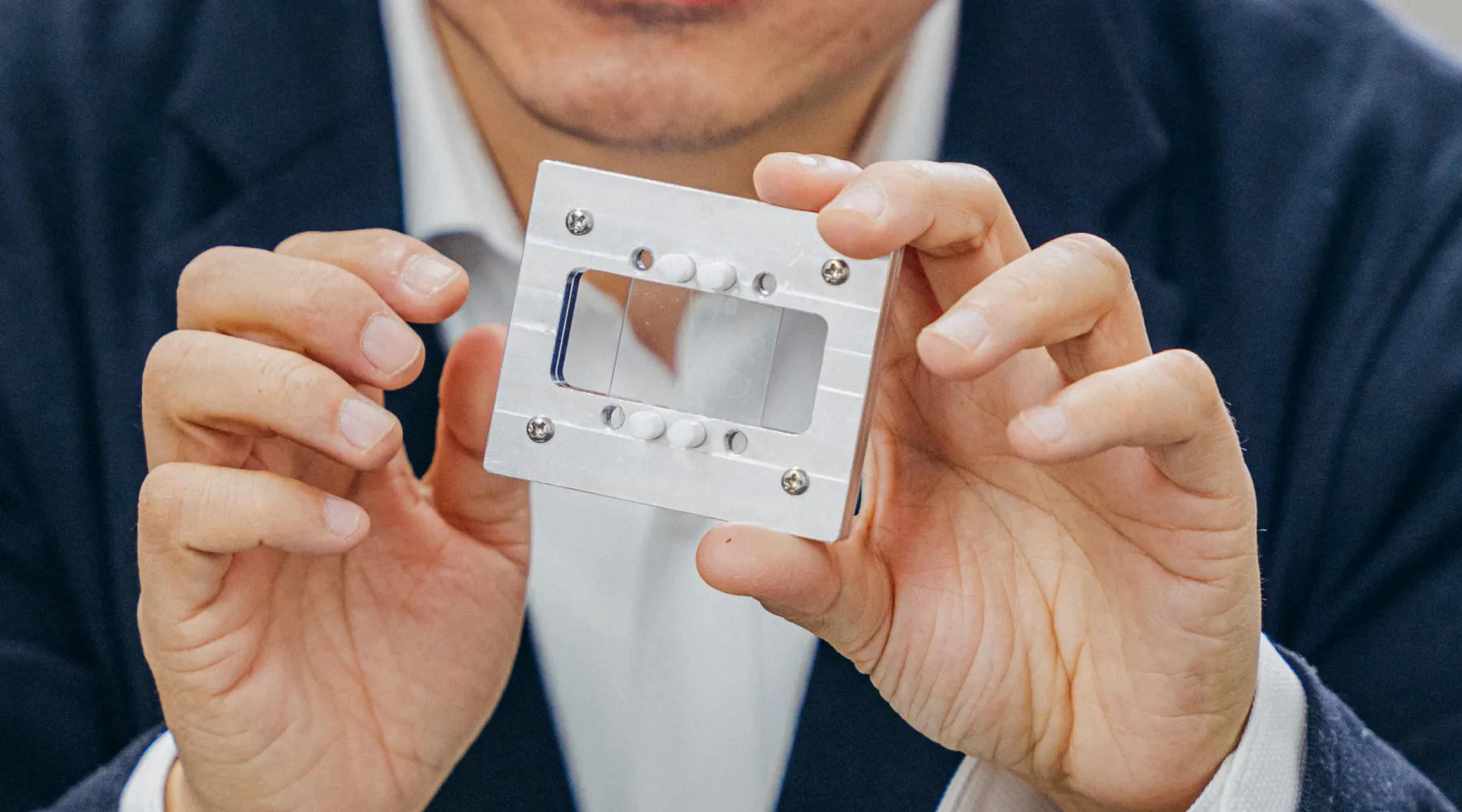
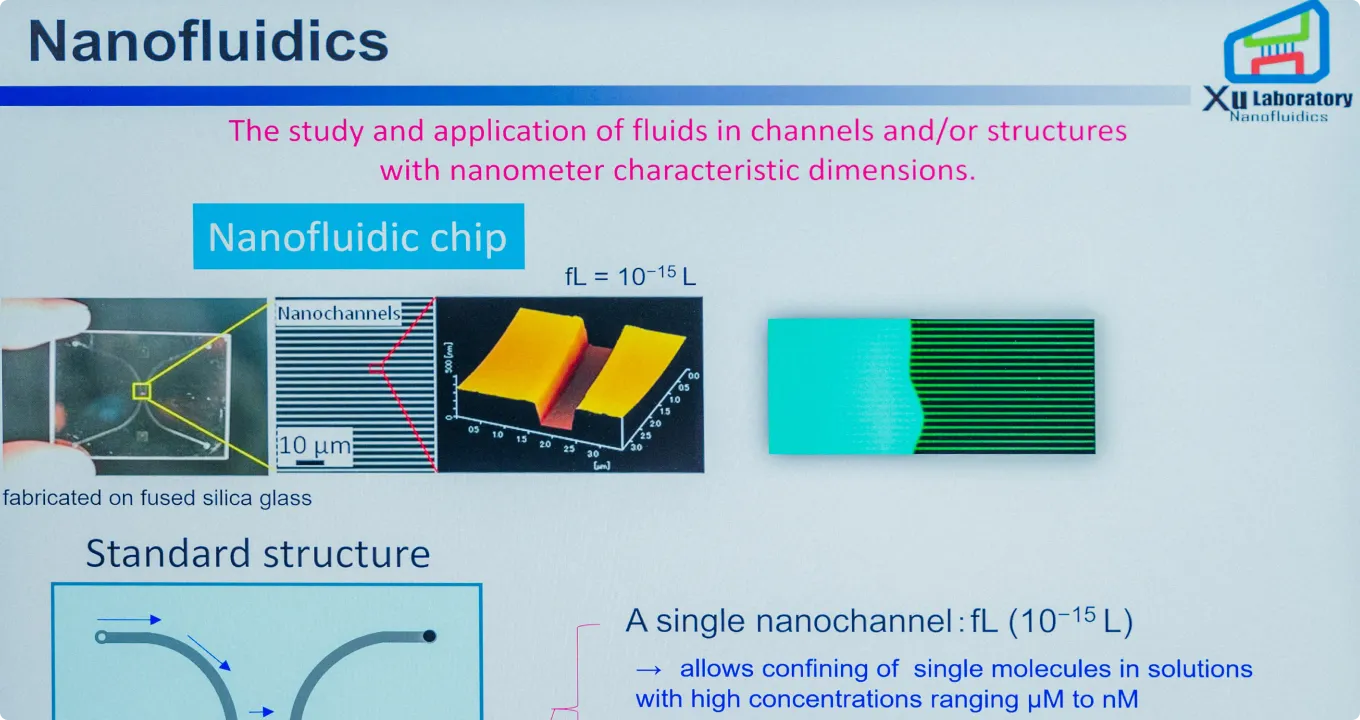
At our laboratory, we conduct research using our uniquely developed "nanofluidic devices" to revolutionize the fields of chemistry, chemical engineering, biology, and materials science. A nanofluidic device is a small glass chip, only a few centimeters in size, with nano-scale fluidic channels (nanochannels) etched into it. This device is gaining attention as an ultra-small fluidic experiment environment.
Furthermore, we have developed a "Nano-in-Nano Integration Technology," which enables fluidic control by incorporating valves into the nanochannels of these devices. Using this technology, we can directly handle individual molecules and control various processes, including detection, transport, mixing, reaction, and separation at the single-molecule level. This concept, which I call "Single-Molecule Regulated Chemistry" and “Single-Molecule Regulated Chemical Process,” has the potential to reveal the essence of chemistry and trigger a paradigm shift in chemical engineering.
While the ability to assemble molecules as freely as mechanical components is still a long way off, some technologies are already expected to be implemented in society in the near future. For instance, in the development of treatments for rare diseases, chemical molecule synthesis is typically simulated on a computer. However, using nanofluidic devices, precise experiments could be conducted with only minuscule amounts of materials. Additionally, in the development of industrial materials such as biofuel cells, this technology may revolutionize production methods at the molecular level.
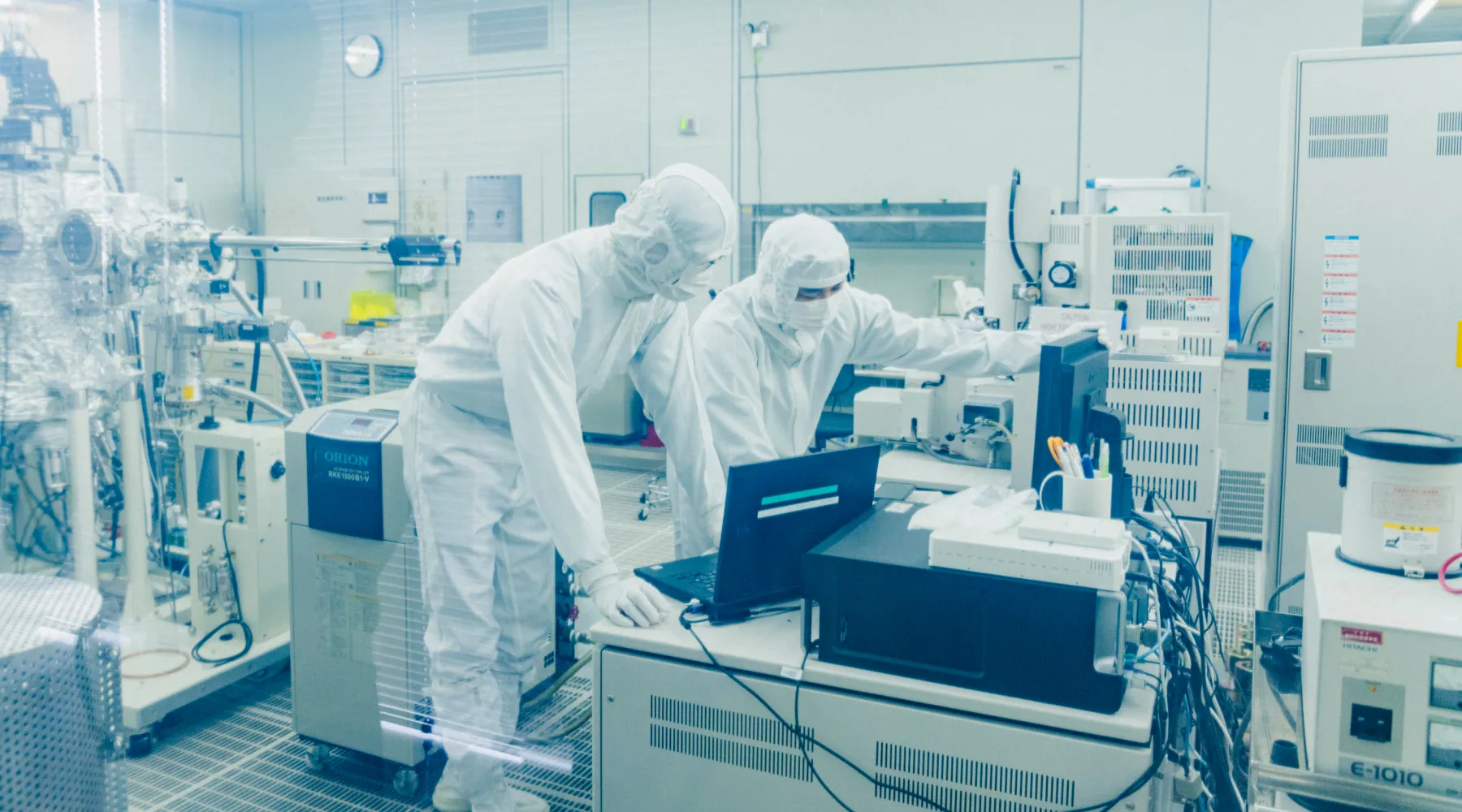
To conduct such advanced research, state-of-the-art facilities are essential. The Nakamozu Campus of Osaka Metropolitan University is equipped with a Class 10 clean room featuring microfabrication equipment, including electron beam lithography systems and dry etching systems, providing strong support for research at the nanoscale.
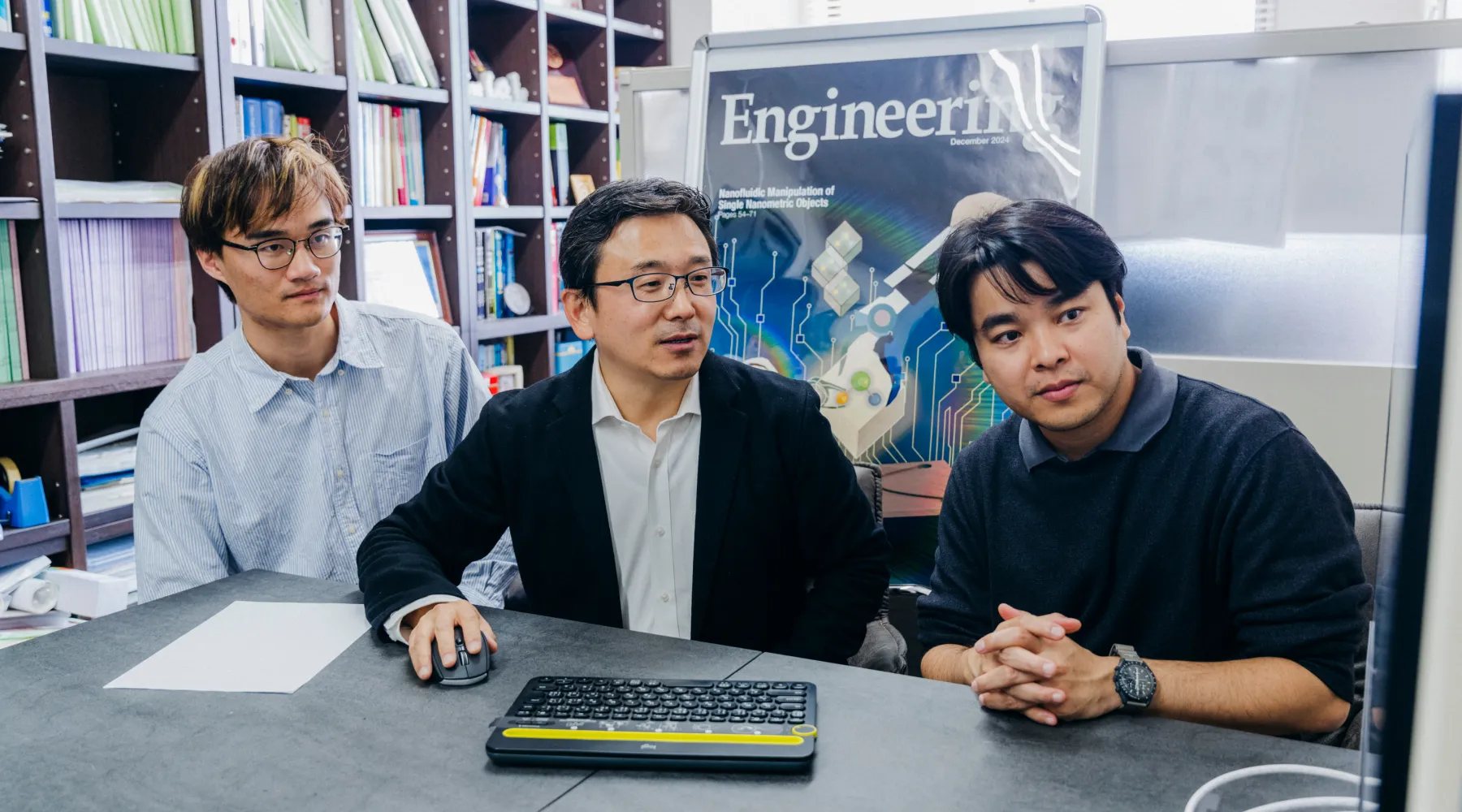
I completed my master’s degree in China and came to Japan as an international student. One of the biggest challenges I faced was the language barrier, which often prevented me from accessing essential information. To address this, we now ensure that all members of our laboratory have equal access to information by supporting multiple languages.
The students seem to enjoy interacting and communicating with each other spontaneously, even without any particular encouragement from us. Osaka Metropolitan University has a student tutor system where Japanese students help international students with daily life, and within our laboratory, anyone who notices someone struggling will quickly step in to help.
Regardless of nationality, when people spend time together, they realize they are all just individuals. I encourage you to meet diverse people, engage in discussions, and inspire each other—this is how exciting research ideas are born.