Research Results
Sep 3, 2018
- Press Release
- Research Paper
- Paper / PressRelease
Press Release Issued on Research Results by Prof. Yutaka Amao et al.
Successful Development of a New Artificial Photosynthesis Technology to Fix Carbon Dioxide by Bonding It to Organic Molecules
A research group led by Yutaka Amao (Professor, Research Center for Artificial Photosynthesis, Osaka City University) and Takayuki Katagiri (a second-year master's student, Department of Molecular Materials Science at the Graduate School of Science) has successfully developed a new artificial photosynthesis technology capable of fixing carbon dioxide (CO2) by bonding it to organic molecules using visible light energy. The results of this research were published on September 3, 2018, in Pure and Applied Chemistry, a journal issued by the International Union of Pure and Applied Chemistry (IUPAC).
Summary
Most conventional artificial photosynthesis technologies involve the photoreduction of carbon dioxide into carbon monoxide, formic acid, formaldehyde, or methanol. Because these systems reduce carbon dioxide, which has a carbon number of one, they only produce molecules with a carbon number of one (C1) (Figure 1). On the other hand, natural photosynthesis uses the reducing power generated by solar energy to reduce carbon dioxide and extend the carbon number, ultimately producing glucose, which has a carbon number of six (C6). If we can extend the carbon number in the same manner as natural photosynthesis, we can expect new developments in the synthesis of diverse materials using carbon dioxide as a raw material.
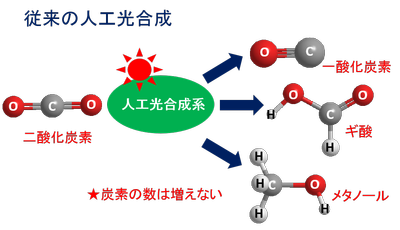
Figure 1: Overview of Conventional Artificial Photosynthesis
In this study, modeled after the carbon extension reaction found in natural photosynthetic processes, we developed a technology that utilizes dye molecules, electron transfer molecules, and biocatalysts. Based on the reducing power obtained from visible light energy, this technology enables the introduction of carbon dioxide into an organic molecule (pyruvic acid) as a carboxy group, resulting in the production of malic acid (Figure 2).
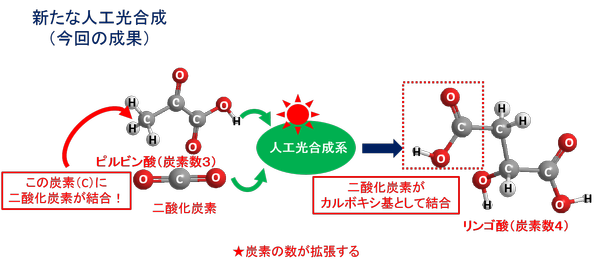
Figure 2: New Artificial Photosynthesis (Current Achievement)
The newly developed reaction system couples a light reduction system using a newly developed "diphenyl viologen derivative" with "malic enzyme," which catalyzes the reaction that binds carbon dioxide to pyruvic acid (a carbon number of three) and converts it into malic acid (a carbon number of four).
Until now, systems for producing malic acid from carbon dioxide and pyruvic acid using visible light energy with malic enzyme as a catalyst required highly complex and expensive reagents, as shown in Figure 3. In particular, the reaction elements enclosed by the dotted line in Figure 3 were extremely expensive and had low efficiency, which had been a barrier to past research.
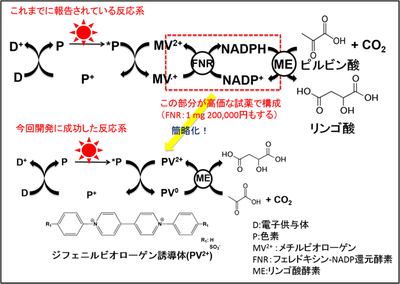
Figure 3
By using the diphenyl viologen derivative this time, we have successfully simplified the part enclosed by the dotted line for the first time in the world. As a result, we have successfully constructed a new artificial photosynthesis system capable of adding carbon dioxide to pyruvic acid. Specifically, in a reaction system using a water-soluble porphyrin as a dye and coupling the diphenyl viologen derivative with malic enzyme, approximately 5% of the raw materials, pyruvic acid and carbon dioxide, were converted into malic acid through three hours of visible light irradiation. Compared to conventional artificial photosynthesis systems where the reduction of carbon dioxide was the mainstream, it can be said that a new artificial photosynthesis system capable of utilizing carbon dioxide as a raw material has been achieved.
Future Development
The results of this research represent a system that can be expanded toward the recycling of carbon dioxide and the synthesis of various organic molecules by utilizing the functions of biocatalysts driven by solar energy. In recent years, research on compiling composites of biocatalysts with semiconductor photocatalysts or organic-inorganic materials has been progressing. Since enzymes that catalyze carbon dioxide recycling reactions have the advantage of high selectivity for reaction products, we hope to expand this as a new future artificial photosynthesis system—not only for converting carbon dioxide into fuel but also for synthesizing a wide variety of chemical products and useful substances by bonding carbon dioxide to organic molecules.
Supplementary Note
The results of this research received the RSC Green Chemistry Poster Prize at the 7th International IUPAC Conference on Green Chemistry held in Moscow, Russia, in October 2017. IUPAC was established in 1919 and is recognized as a global authority for standards in naming elements and compounds (IUPAC nomenclature).
(RSC: Royal Society of Chemistry)
Publication Information
| Journal: | Pure and Applied Chemistry (International Union of Pure and Applied Chemistry: IUPAC) |
|---|---|
| Paper Title: | "Visible Light-induced Reduction System of Diphenylviologen Derivative with Water-soluble Porphyrin for Biocatalytic Carbon-carbon Bond Formation from CO2" |
| Authors: | Takayuki Katagiri, Kohei Fujita, Shusaku Ikeyama, Yutaka Amao |
| URL: | https://doi.org/10.1515/pac-2018-0402 |