TOPICS
Jan 7, 2024
- NEWS
- Others
- Others (Facility Tours, Media, etc.)
Interview with Hiroshi Nishino, Executive Managing Director of Iida GHD, Professor Yutaka Amao, Director of the Research Center for Artificial Photosynthesis, and Specially Appointed Professor Shigeyuki Minami
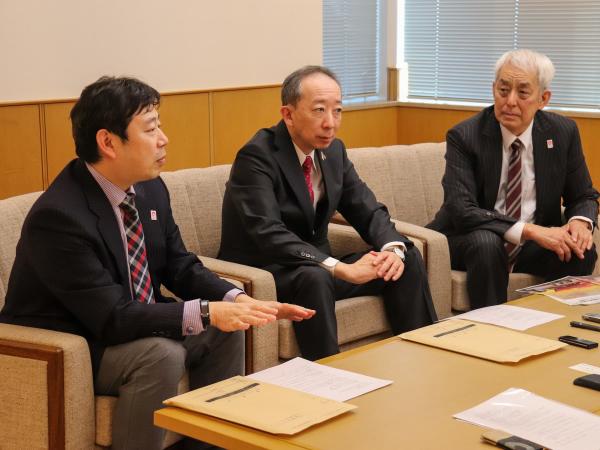
Osaka Metropolitan University (OMU), in collaboration with Iida Group Holdings (hereafter referred to as Iida GHD), will co-exhibit a pavilion at the 2025 International Exhibition (Expo 2025 Osaka, Kansai, Japan). With Iida GHD, which pursues long-term, comfortable, and healthy living spaces while protecting the global environment, OMU has established joint research divisions at both the Research Center for Artificial Photosynthesis and the Center for Health Science Innovation to conduct collaborative research. The outcomes of this research will be showcased at the Expo in the form of the "IG Perfect Eco-House" equipped with artificial photosynthesis technology, and the "Wellness Smart House" where AI manages residents' health.
On this occasion, we invited Hiroshi Nishino, Executive Managing Director of Iida GHD, along with Professor Yutaka Amao, Director of the Research Center for Artificial Photosynthesis, and Specially Appointed Professor Shigeyuki Minami from the same center, to discuss the background of their Expo exhibition and their primary research findings regarding artificial photosynthesis.
How will housing and cities change in the near future?
What do you intend to express through the Expo pavilion, the "Iida Group × Osaka Metropolitan University Joint Pavilion"?
Executive Managing Director Hiroshi Nishino (hereafter Nishino):
The theme of the Expo is "Designing Future Society for Our Lives," but the seed for the future lies in our past. Through the pavilion's exterior and inner exhibits, we wanted to express that there are technologies evolving from the past toward the future, repeating a cycle of renewal while inheriting traditions. Therefore, we decided to use Nishijin-ori weaving, a 1,200-year-old tradition from Kyoto, for the exterior, giving it a unique structure based on the motif of a Möbius strip.
Inside the pavilion, we will introduce the artificial photosynthesis technology developed in collaboration with the Research Center for Artificial Photosynthesis, as well as the Wellness Smart House developed with the Center for Health Science Innovation. Regarding the artificial photosynthesis house, we will present environment-friendly technologies, including systems that utilize sunlight to power the home completely, and technologies that break down naturally derived materials under sunlight to generate energy. As for the Wellness Smart House, we will demonstrate part of our technology that uses the entire house to collect and analyze residents' health data via AI. We want visitors to experience this future health-focused home, which will ultimately help extend healthy life expectancy. In addition, we will use models and videos to project images of a future city, and we hope students of the next generation will also showcase their own visions of the future.
Self-sufficiency of energy becomes possible through artificial photosynthesis.
Could you tell us more about the artificial photosynthesis house?
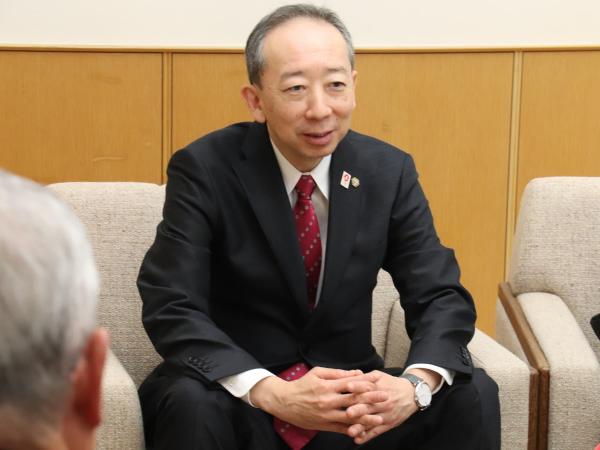
Specially Appointed Professor Shigeyuki Minami (hereafter Minami):
The goal of artificial photosynthesis is to allow all of humanity to maintain civilization and achieve happiness. Unlike fossil energy, which has limited reserves and restricted geographical distribution, solar energy pours onto the earth endlessly. It is said that the solar energy received in just one year is more than 100 times the total energy amount of all global fossil fuel reserves. What we aim to do with the artificial photosynthesis house is precisely to use this solar energy directly to cover all the energy consumed by a household. If realized, it will benefit people all over the world.
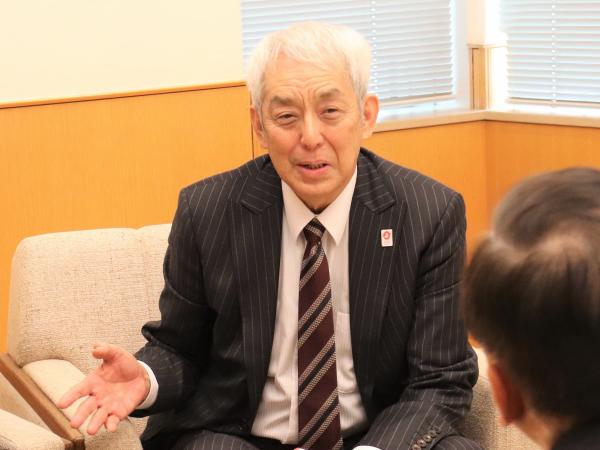
Director Yutaka Amao (hereafter Amao):
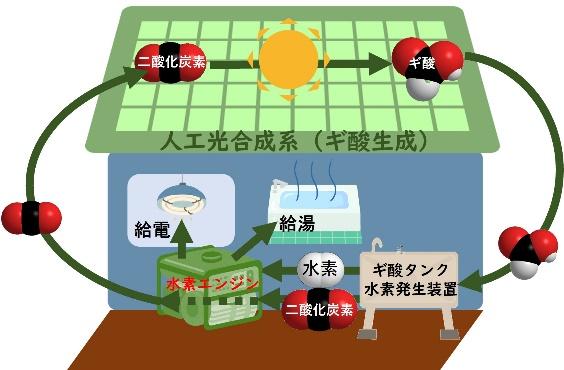
In the artificial photosynthesis house, we use solar energy to generate formic acid from carbon dioxide (CO2). Then, we generate electricity by utilizing hydrogen produced from that formic acid as a hydrogen energy source. By capturing the CO2 emitted during hydrogen generation and feeding it back into the artificial photosynthesis process, we can produce formic acid once again. This creates a home that practically achieves net-zero CO2 emissions. Previously, a major challenge when creating substances from CO2 was that carbon always remained as a byproduct. By recycling that carbon back into CO2, we want to realize true carbon neutrality. I believe artificial photosynthesis is the breakthrough to achieve this.
First of all, how would you define artificial photosynthesis?
Amao: One definition of artificial photosynthesis is the utilization of light energy when breaking down water to produce hydrogen, or when using CO2 as a raw material to create useful substances.
Natural photosynthesis conducted by plants uses sunlight to produce starch or glucose from CO2 and water, releasing oxygen. While natural photosynthesis creates starch and glucose, the appeal of artificial photosynthesis is that we can produce a wide variety of substances from CO2. For instance, in addition to the formic acid mentioned earlier, we can create carbon monoxide, methanol, and even raw materials for plastics. However, because it is so versatile, deciding on a single goal can be challenging.
Among all options, formic acid is the easiest substance to produce from CO2 using artificial photosynthesis, and my original research focused on this process. While people often say it is "amazing" that substances can be created from CO2, the real question is what we should do after that "amazing" step. After much consideration, I chose the utilization of formic acid as the next energy source to be one of the core pillars of this project. Being able to actively utilize CO2 is, I believe, one of the original and true purposes of artificial photosynthesis.
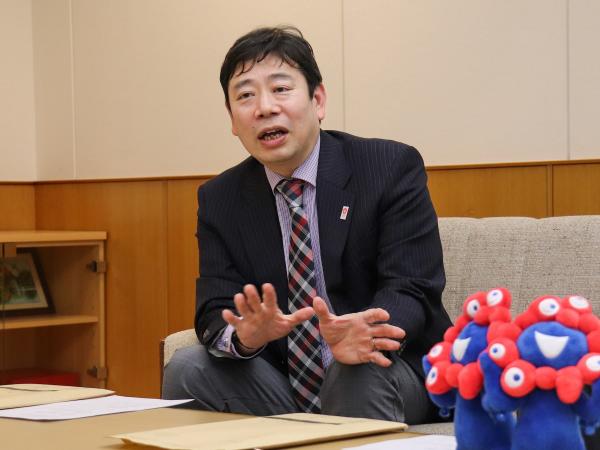
Collaborations with other fields and companies create new possibilities.
Could you tell us about the background behind your decision to exhibit at Expo 2025 Osaka, Kansai, Japan?
Minami: Iida GHD and OMU have been conducting various collaborative research projects for more than 20 years. One example is the exhibition of an artificial aurora generator at the Osaka Pavilion during the 2010 Shanghai Expo. At that time, I belonged to the Faculty of Engineering, but after transferring to the Research Center for Artificial Photosynthesis in 2012, I recognized the potential for a new joint research project perfectly suited for artificial photosynthesis. If each home could be equipped with a device that produces hydrogen through artificial photosynthesis and converts it into energy, we could realize homes that are completely self-sufficient in energy. When I proposed this idea to Iida GHD, they deeply resonated with it. As a result, a large-scale joint research project started in fiscal year 2015, which I have been working on alongside Professor Amao, the director of the center. In the midst of this, when the university suggested co-exhibiting a pavilion at Expo 2025 to showcase the results of our joint research, they readily agreed.
Nishino: We applied to exhibit because we believed it was a great synergy that the theme of the Expo perfectly matched our joint research theme on future living. I believe our application was approved partly thanks to the prominent brand value of Osaka Metropolitan University.
While Iida GHD is recognized as the company with the largest share of detached housing sales in Japan, we believe it is essential to build homes with solid fundamental quality, rather than just building them in large numbers. Therefore, we supply homes that achieve the highest grades in major categories of the Housing Performance Evaluation established by the Ministry of Land, Infrastructure, Transport and Tourism, such as earthquake resistance and thermal environment. Homes must not only be gentle on people, but the cities we live in must also be environment-friendly. It would be highly valuable if we could create a system in housing that minimizes the use of fossil fuels. This vision took shape through my connection with Professor Minami, which further led me to Professor Amao, who is advancing the research on artificial photosynthesis. I am very grateful that this project is progressing smoothly.
Amao: When the decision to exhibit at the Expo was made, my very first thought was, "Will we make it in time?" and my heart almost stopped. It is rare for technology in the basic research stage to lead directly to demonstration testing, so showcasing demonstration-level research results at the Expo is a massive milestone for us as researchers. Employees from Iida GHD have also come to the university to conduct experiments, allowing us to engage in substantial and practical industry-academia collaboration.
In fact, most demonstration tests reported in society are merely upscaled versions of existing experiments. Even in demonstration tests that successfully generated large amounts of hydrogen, I believe the generated hydrogen was rarely put to practical use. By teaming up with Professor Minami, an expert in electrical engineering, in this joint research, we have mapped out the entire process, including using the generated hydrogen as power and capturing CO2. Moving from the research question stage to a point where implementation is viable is a major breakthrough. I believe this will likely be the very first essential demonstration test of artificial photosynthesis in the world.
Nishino: The success of this joint research is based on the integration of Professor Amao’s field of chemistry and Professor Minami’s field of electrical engineering, which allows it to function as a single system for the first time. From a layman’s perspective, I believe it was wonderful that each field could cooperate toward a single objective, achieving what would have been difficult through basic research alone.
Minami: Exactly. This joint research must be driven by a high ambition and the goal of practicalizing artificial photosynthesis. I believe that taking the research all the way through to the demonstration phase is where the true significance of partnering with a corporation lies.
Finally, could you share your thoughts on this project and give a message to the students?
Minami: I want everyone to know that such a massive project is already underway at Osaka Metropolitan University, which was just newly integrated in 2022. Also, as Executive Managing Director Nishino mentioned earlier, this Expo offers opportunities for students to participate actively. It is a once-in-a-lifetime opportunity, so I truly hope they will take part and cooperate with us.
Amao: While one core aspect of university research is basic research, I hope people can see and feel how it evolves from those foundations into something truly useful for society. This technology connects us to a future far beyond the Expo. For instance, the Paris Agreement aims to curb carbon emissions by 2050. When looking back from the year 2050, I hope people can reflect and say, "The technology we saw back then has actually been realized," and that this Expo serves as the catalyst for that thought.
Nishino: I would like everyone to understand that a great ambition brings about great connections. Our sincere desire to build an environment-friendly society and extend healthy life expectancy has drawn in these unexpected, wonderful connections, leading to our collaborative research and Expo exhibition.
Furthermore, it is because stakeholders have continuously supported the university since the eras of Osaka City University and Osaka Prefecture University—building a wonderful institution—that our company was able to meet you all, leading directly to this Expo. The tradition that everyone has nurtured created this platform, which is now being passed down to the current students. I believe the Expo is one of the symbolic events of this transition. Above all, co-exhibiting a pavilion at the Expo through an industry-academia collaboration is a first in Japan. Since Osaka Metropolitan University has achieved this, I sincerely hope that many students and alumni will visit the Expo, see the pavilion bearing their university's name, and feel a deep sense of pride.
I believe that collaborative research triggers a mutual chemical reaction between both sides. For example, corporations inevitably tend to become business-minded, which often limits our imagination. However, the unique perspectives of researchers stimulate us and provide fresh ideas. When business thinking and academic research unite, something unprecedented is born. If we can showcase our achievements to society at this Expo, it will help elevate the brand value of Osaka Metropolitan University. As a company, we are fully committed to this project with a strong sense of responsibility.
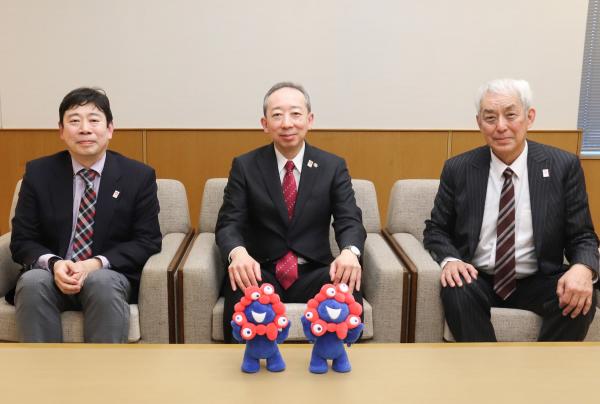
Profile
Hiroshi Nishino (Executive Managing Director, Iida Group Holdings)
Joined Recruit Co., Ltd. in 1988. Joined Toei Housing Co., Ltd. (currently a subsidiary of Iida Group Holdings) in 2006, and was appointed as its President and Representative Director in 2007. He has served as a Director of Iida Group Holdings since 2013, becoming Managing Director in 2019, and Executive Managing Director in 2021. He has been in his current position since March 2022.
Yutaka Amao (Professor and Director, Research Center for Artificial Photosynthesis, Osaka Metropolitan University)
Holds a Ph.D. in Engineering. Graduated from the Graduate School of Tokyo Institute of Technology in 1997. His research fields include nanotechnology/materials, green sustainable chemistry, and environmental chemistry. After working as a researcher at the National Aerospace Laboratory of the Science and Technology Agency (currently Japan Aerospace Exploration Agency, JAXA) and as an Associate Professor at Oita University, he joined the Research Center for Artificial Photosynthesis in 2013. He assumed the position of Director in 2015.
Shigeyuki Minami (Specially Appointed Professor, Research Center for Artificial Photosynthesis, Osaka Metropolitan University)
Holds a Ph.D. in Engineering. Graduated from the Graduate School of Engineering, Osaka City University (currently Osaka Metropolitan University) in 1972. His expertise spans manufacturing technology (mechanical, electrical, electronic, and chemical engineering), power engineering, and space and planetary science. He exhibited an "Artificial Aurora Generator" at the Osaka Pavilion during the 2010 Shanghai Expo. In 2019, he became the first in the world to successfully develop and implement a hydrogen-driven propulsion ship system utilizing a completely new method.
Article source: Osaka Metropolitan University ✕ Expo 2025 Osaka-Kansai