Clinical Training Report
Clinical Training report
WEYNANDS Jérémy
- Country / Regions
- Belgium
- School
- Université libre de Bruxelles
- Elective period
- 29 June to 24 July 2026
Neurosurgery department
I began my internship at Osaka Metropolitan University Hospital with two weeks in the Neurosurgery department. Every day, the morning conference was held in English, and the resident on duty presented the surgical procedures from the previous day, illustrated with a short video of the intervention. This was followed by a presentation of the preoperative imaging and clinical findings for that day’s patients.
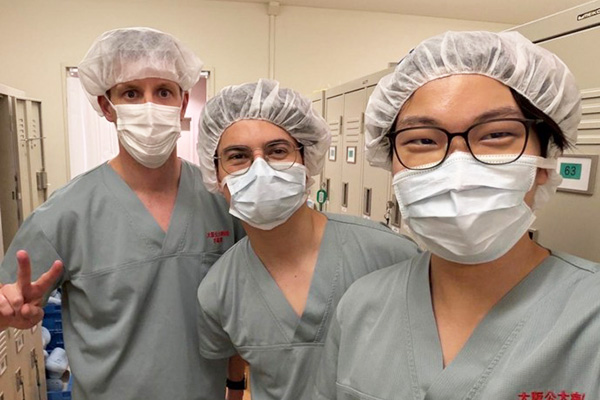
We were a group of six students in the neurosurgery department — one Spanish, four Japanese, and myself. Almost every day, there was also a lecture given by Dr. Sakamoto, a senior neuropediatric surgeon, or by one of the department’s surgeons — Prof. Goto, Dr. Ichinose, Dr. Naito, or Dr. Uda — on topics ranging from epilepsy to spine surgery. Dr. Sakamoto was extremely kind and trained us in the clinical evaluation of neurosurgical patients. We also took part in a micro-suturing workshop during the two weeks.
We were further able to observe various neurosurgical procedures in the OR, including insular glioma surgery, hippocampectomy, transsphenoidal pituitary tumor surgery, and a Wada test. At the end of the two weeks, we presented a case to Dr. Sakamoto and the other students, carrying out the pre- and post-operative evaluation of a patient undergoing hippocampectomy for refractory epilepsy. It was especially interesting to follow the patient through the different evaluations, both before (Wada test) and after surgery.
Cardiovascular surgery department
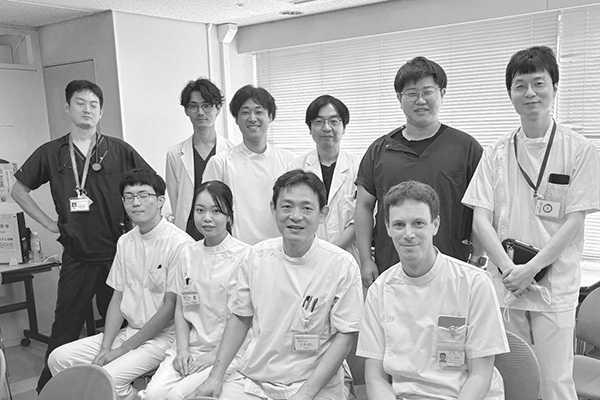
My two weeks in the cardiovascular surgery department were an incredibly rich learning experience. The department is led by Prof. Takahashi. Twice a week, we joined with four fifth-year Japanese students for the morning conference, which was held in both English and Japanese; whenever a case was presented in Japanese, Dr. Kawase kindly translated for me.
Every day, we had the opportunity to observe a surgery in the OR. The procedures were remarkably diverse: over the two weeks, I was able to attend coronary artery bypass grafts, robot-assisted mitral valve repairs for prolapse (using artificial chordae, resection, and annuloplasty), MAZE procedures, endovascular aneurysm repairs (EVAR) for abdominal aortic aneurysms, direct aortic access with Y-graft repair for aortic aneurysms, and aortic prosthetic valve implantations. For each surgery, a physician or resident from the department was present to walk us through the steps, which helped me better understand the different surgical approaches and the use of extracorporeal circulation (ECC).
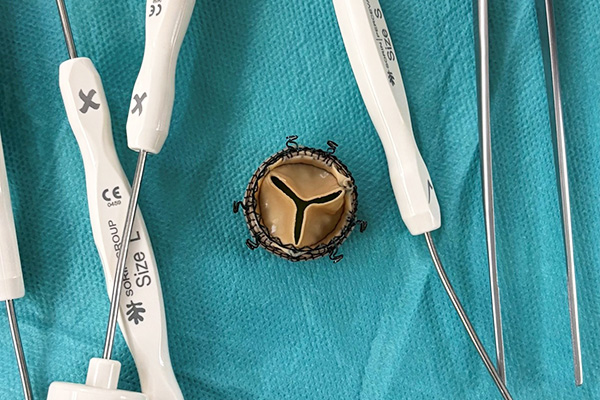
All the doctors in the department were extremely kind and patient with the group of students observing the surgeries, and we even had small workshops during some procedures to learn about the equipment, prostheses, and surgical techniques used. Dr. Takahashi, Nishiya, Kishimoto, Kawase, Inno, and Iwane were all incredibly welcoming, and I learned a great deal thanks to them during those two weeks.
Life in Osaka
The international student dormitory is located just five minutes from the School of Medicine and the University Hospital, which makes it extremely convenient. The individual rooms are very comfortable, each with a small balcony offering a view of Abeno Harukas Tower, the tallest building in Osaka, located near JR Tennoji Station. There is a shared kitchen, shower, and bath, which I shared with one other international student from Spain. There is a swimming pool, a sento, big supermarket not far from the dorm.
The medical school students organized a welcome party for us, as well as a takoyaki party. It was a wonderful way to get to know other students and exchange thoughts about life and medical school together. On weekends, we had the chance to visit nearby cities such as Kobe, Himeji, Kyoto, and Nara, and spent a day at the beach in Isonoura — not to mention discovering Osaka’s vibrant cultural life and its food: delicious takoyaki, okonomiyaki, tempura, oden, and sushi. The last day of my stay in Osaka coincided with the famous Tenjin Matsuri, which was a great way to learn more about Japanese summer festivals.
I would like to thank once again all the staff at OMU, as well as the professors, doctors, and medical students, for this fantastic exchange program.