In Focus
Apr 30, 2026
- Engineering
- Literature and Human Sciences
Where science meets culture: Unraveling the mysteries of cultural assets with analytical science
Professor Naofumi Kishimoto
Department of Philosophy and History, Graduate School of Literature and Human Sciences
Professor Kouichi Tsuji
Department of Chemistry and Bioengineering, Graduate School of Engineering
Japanese cultural artifacts are historical objects that were created and used by humans. However, analyzing them can be tricky because they are irreplaceable parts of Japan’s cultural heritage, making even minimal damage unacceptable.
Researchers at Osaka Metropolitan University have been innovating the use of non-destructive analysis techniques for interdisciplinary research. Especially, the Graduate School of Engineering is collaborating with the Graduate School of Literature and Human Sciences to use the latest techniques to delve into Japan’s ancient past.
We spoke with Professor Naofumi Kishimoto, whose specialty is archaeology of the Kofun period (mid-3rd to 7th century CE), and Professor Kouichi Tsuji, whose specialty is physical analytical science using X-ray fluorescence analysis, about the research collaborations between their departments. Their research exemplifies the multidisciplinary research at OMU that bridges historical scholarship and the natural sciences.
X-ray Fluorescence Analysis Meets Cultural Heritage Analysis
──Fluorescence X-ray analysis is used for material analysis of cultural artifacts. Could you explain its mechanism and characteristics?
Professor Kouichi Tsuji: “X-ray fluorescence analysis is a useful technique for identifying elements in various samples. It allows relatively simple elemental analysis and has been used in a wide range of fields.
When X-rays hit a sample, they knock out electrons from the inner parts of atoms. Then, electrons from the outer parts fall into these empty spots. The energy difference between the outer and inner electron levels is released as characteristic X-rays. Different elements have different numbers of protons and different arrangements of electrons, meaning that the energy gaps between inner and outer electron shells are unique. By measuring the energy of these emitted X-rays, we can tell which elements are present.
Of course, there are other techniques. For elements contained in aqueous solutions, ICP emission spectroscopic method is commonly used instead of X-ray fluorescence analysis. However, this method requires dissolving the sample in acid or other solvents to create an aqueous solution. Also, when you use this technique to analyze paintings, it is necessary to take paint samples, which is obviously difficult to justify with precious cultural artifacts where preserving the object is paramount. That's where X-ray fluorescence analysis is useful.”
──Your specialty, Professor Tsuji, is physical–chemical analysis science. Have you been using these techniques to analyze cultural properties for a long time?
Tsuji: “Until my doctoral program, my research focused on glow discharge optical emission analysis. After completing my degree, I became an assistant at Tohoku University's Institute for Materials Research. My supervisor at the time suggested a non-destructive analysis method called X-ray fluorescence analysis and asked if I would be interested in taking it on as a field. That was the starting point for my research.
From 1998 to 1999, I studied abroad at the University of Antwerp in Belgium. The elemental mapping research I undertook at that time is directly connected to my current research interests.
Later, I collaborated with the University of Antwerp again in a research project that focused on analyzing cultural properties. In that project, we included paintings from not only Belgium but all across Europe to examine their pigments and authenticity. These experiences reinforced my strong belief that non-destructive analysis is essential for the preservation of cultural assets. This is something I've been involved in for about 10 years now.”
──I understand you recently analyzed the ‘Yoshizawa Collection,’ which is held by the Graduate School of Literature and Human Sciences. Could you explain the purpose of this analysis?
Kishimoto: “Among the kōdan* storybooks in our university's Yoshizawa Collection, there are about 90 books that feature vibrant color-printed cover illustrations by famous artists like Yoshitoshi Tsukioka. These books date from 1888 to 1897, which was the Meiji era in Japan. Professor Mayumi Sugawara from the Graduate School of Literature and Human Sciences, who specializes in ukiyo-e**, proposed analyzing the pigments used in these illustrations.
The cover illustrations of these books were produced using woodblocks. Woodblocks were important in this era, as they helped to mass-produce the storybooks cheaply since this series was often sold as a supplement to newspapers.
Starting around the late Edo period (early–mid-19th century), imported vibrant red and blue pigments began entering Japan. Then, in the early 20th century after the Meiji era, other new materials were introduced. One of the goals of this project is to determine how widespread these imported pigments were across different genres of books.”
*Kōdan is a traditional style of Japanese storytelling that focuses on historical events, heroic deeds, or samurai tales
**Ukiyo-e is a form of Japanese woodblock printing that was popular from the 17th to 19th centuries
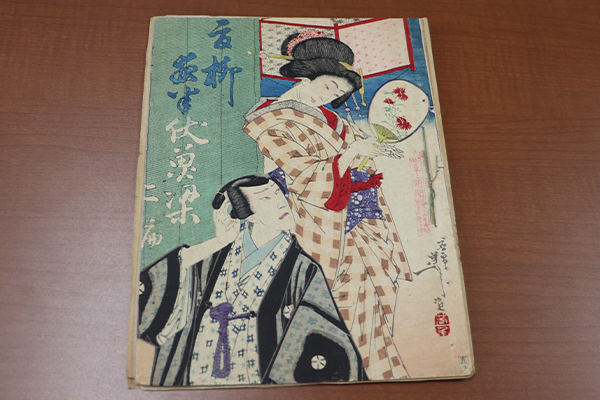
The Yoshizawa Collection of kōdan (storytelling books)
Analysis Reveals Insights about the Objects
──What did your analysis of the Yoshizawa Collection reveal?
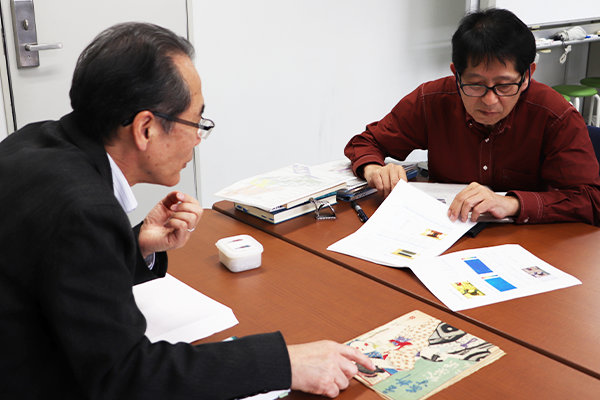
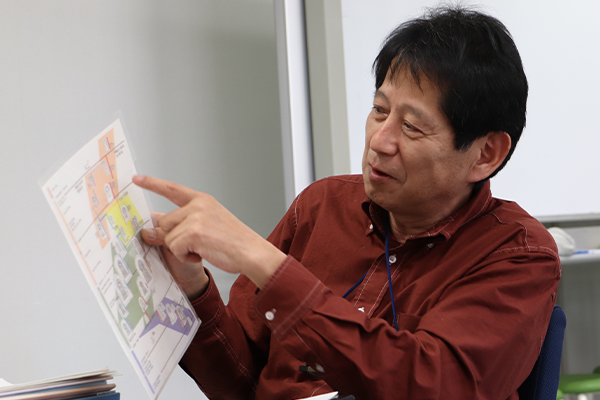
Tsuji: “Fluorescent X-ray analysis revealed iron, chromium, sulfur, arsenic, and other elements in the sample. These results were then output as distribution data, for example, areas containing arsenic and sulfur correspond to yellowish sections whereas iron appears as slightly darker blue areas. However, this analysis method only shows what elements are present and where; what those findings actually signify requires examination by a specialist.”
Kishimoto: “Just seeing the names of the metals allows experts to identify what kind of paint was used. In the future, we'd like to secure the cooperation of specialists in this field, while relying on Professor Tsuji for the analysis itself, of course.”
──Professor Tsuji, how will you proceed with analyzing the arrowhead that Professor Kishimoto brought today?
Kishimoto: “This copper arrowhead was unearthed during my excavation survey in Kashiwara City, Osaka Prefecture. While X-ray fluorescence analysis can give us the percentages of copper, tin, and other elements it contains, the data obtained from standard X-ray fluorescence analysis is only from materials near the surface.
This creates a problem as arrowheads are made from an alloy of melted copper, tin, lead, and other metals; therefore, during solidification, the ratios may differ between the surface and the interior. This raises an interesting question of whether the surface data obtained through non-destructive analysis truly reflects the composition of the entire sample. However, Professor Tsuji has developed a technique that can capture data not just from the surface but the interior too, up to a certain depth. Analyzing the interior could reveal important information.”
Tsuji: “I think this is something that can be measured. Looking at the arrowheads, there are some areas where the coating is peeling off. What is the light blue part?”
Kishimoto: “The light blue area appears to be where rust formed and then flaked off.”
Tsuji: “There are also these deep green areas. Looking at these areas from the surface downwards gives us lots of information. For metals, we can see down to tens of microns; for plastics or wood, several hundred microns to about 1 mm deep. While conventional equipment gathers information from both surface and deeper layers at once, our university uses a technique called confocal measurement to selectively capture data from specific depths. This is probably unique to our university in Japan.”
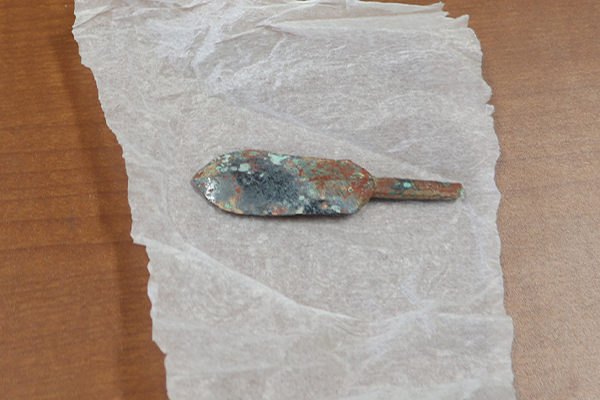
Arrowhead unearthed in Kashiwara City
Arrowheads Excavated in Kashiwara City
──By understanding the elements and their depth, what insights can be gained?
Kishimoto: “From a metallurgical perspective, I believe there are elements that solidify quickly during the solidification process and others that remain liquid in the core for longer. I've also heard about surface treatments, but there's still much we don't understand. I want to know the precise overall ratio of the alloy and what differences emerge between the surface and interior during casting.
Beyond X-ray fluorescence analysis, we're also having the samples analyzed using instantaneous gamma-ray analysis, which penetrates the entire sample. Each analytical method has its own characteristics and understanding them is quite challenging. If we could categorize them in terms of their ability to perform cultural property analysis methods—like, ‘this device can do this’ or ‘for this purpose with this sample, this analysis is best’—it would make it much easier for us to send samples for analysis.”
Tsuji: “Our university has several devices suitable for such analyses. Please feel free to ask our department to use them.”
Utilizing the Interdisciplinary Research Hub Development Program to contribute to cultural heritage research in Osaka
──The Humanities-based Interdisciplinary Research Center at the Graduate School of Literature and Human Sciences has been conducting joint research as a participating institution in the ‘Interdisciplinary Hub Development Program’ project of the Institute for Materials Research, Tohoku University, since the 2023 academic year. I am interested in hearing about specific examples of these collaborative efforts.
Kishimoto: “The first year focused primarily on establishing the foundation, whereas in the second year, the research side of things was emphasized. The analysis of the Yoshizawa Collection is one example. Our university holds more paper materials, such as ancient documents, than metal-based artifacts, so we also need to consider how we can analyze these kinds of materials.
Furthermore, we've consulted with Osaka Prefecture and are working on expanding the range of materials to include items excavated within the prefecture such as glass beads from ornaments excavated from ancient tombs that are currently held by the Osaka Prefectural Asuka Museum in Kanan Town.
We know that glass beads from that era used colorants to produce their hues, such as copper for green and cobalt for blue; therefore, we want to analyze them using X-ray fluorescence.
Another area is clay body analysis, which consists of examining the characteristics of the clay used in pottery. The ratio of elements in the soil differs by region, which allows us to understand the characteristics of the production area and determine how far the artifacts were transported. We are conducting this research in collaboration with a professor at another university who studies haniwa* figurines.”
* Terracotta clay figures that were buried with the dead as part of funerary procedures during the Kofun period
──What developments are planned for the future?
Kishimoto: “Japan's largest Kofun-period forge workshop was located in Kashiwara City. I want to investigate whether the iron used in that workshop was domestically produced. Iron production began in Japan around the 6th century. While some analysis has been done, I want to see if we can pinpoint the exact origin, such as whether it's from Okayama or Omi, assuming, of course, that it was domestic iron. Additionally, I'd like to work on 7th-century materials, in addition to the 6th-century materials analyzed so far.
Another area is materials related to the Kawachi casters, a group of casting technicians active from around the 11th century during the Heian period through the Kamakura and Muromachi periods. While casters typically made pots and cauldrons, the Kawachi casters were so skilled they handled large bronze bells and iron products, even contributing to the Great Buddha of Kamakura*. Casting-related artifacts have been excavated from sites, but scientific analysis has been limited, so I'd like to start working on this area too.”
* An over 11-meter-tall Buddha that is an important part of the Buddhist cultural heritage of Japan. It is made out of iron, showcasing early industrial casting technology.
──Finally, please share your expectations of interdisciplinary research, like this project, that bridges the humanities and sciences.
Tsuji: “This time, we made good progress in collaboration with professors from the Graduate School of Literature and Human Sciences. However, there may be objects and documents requiring non-destructive measurement in other fields as well, such as economics or law. I am interested in exploring what kind of collaborations are possible within the university, including with professors in the humanities.”
Kishimoto: “I believe this research is already being pursued within the university, but the key will be aligning it with the university’s existing research strengths. My specialty is comparing and classifying keyhole-shaped burial mounds. Previously, we would overlay 2D maps with contour lines by matching the map with scale images of the mound. Now, we should be able to match them using 3D. That way, instead of comparing flat plans, we can overlay them in 3D and determine the best match.
For this kind of project, I am excited by the possibility of working with professors in fields like information science. I would be happy to provide my data on burial mounds from the Kofun period, and they could then compare the 3D data and determine whether they matched. That kind of interdisciplinary research really interests me.”
Researcher’s details
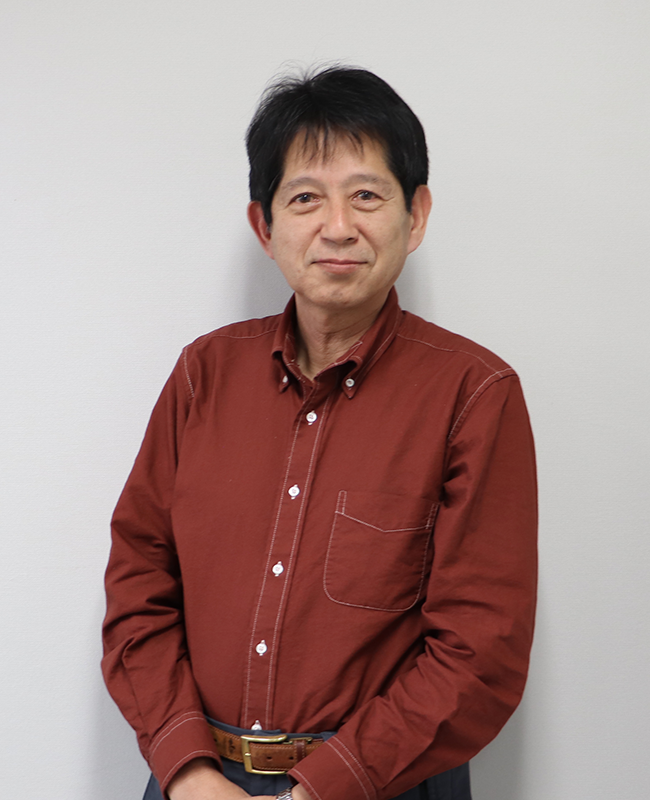
Professor Naofumi Kishimoto
Department of Philosophy and History, Graduate School of Literature and Human Sciences
Professor Kishimoto obtained his Master’s qualification at Kyoto University. Previously employed as a Technical Officer at the Nara National Research Institute for Cultural Properties, he entered Osaka City University as an Associate Professor in 2000 and was promoted to Professor in 2015.
His research focuses primarily on the Kofun period with research interests including analyzing political trends during the Kofun period through morphological analysis of keyhole-shaped burial mounds. The author of numerous works about the topic, Professor Kishimoto also serves on municipal committees concerned with the preservation of historic sites.
Researcher’s details
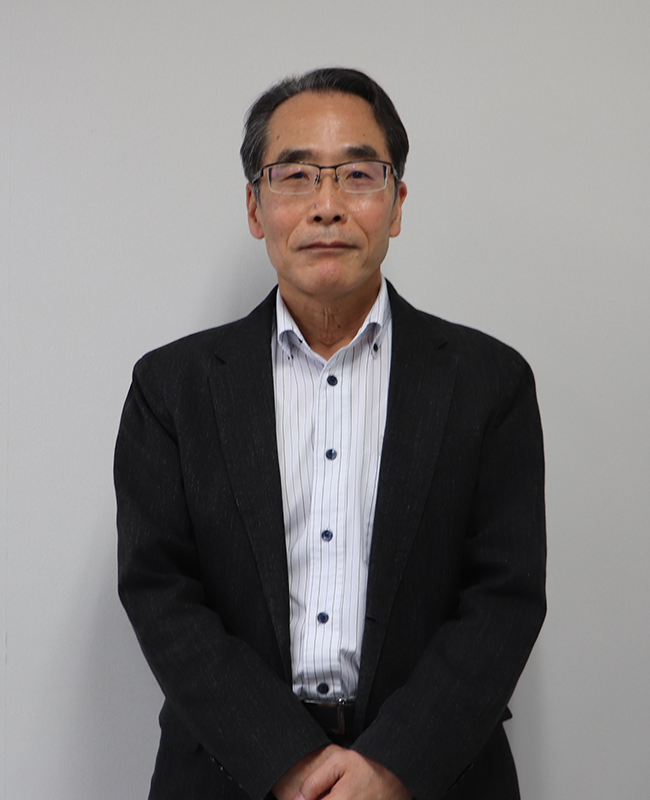
Professor Kouichi Tsuji
Department of Chemistry and Bioengineering, Graduate School of Engineering
Professor Tsuji completed his doctoral program in the Graduate School of Engineering at Tohoku University. In 2002, he entered Osaka City University's Graduate School of Engineering as an Associate Professor and became a Professor in 2008.
His research focuses on non-destructive elemental analysis using X-ray analysis, with research interests in the failure analysis of industrial products, environmental sample analysis, and forensic science.
In recognition of his outstanding contributions to the field of X-ray spectroscopy, Professor Tsuji was awarded the Japan Society for Analytical Chemistry Award in 2019 and the Birks Award in 2022.
SDGs


