Research News
Apr 21, 2026
- Veterinary Science
Non-contact detection of post-regurgitation deep inhalation in calves using infrared thermography and deep learning-based nostril segmentation
Tracking breathing with video data
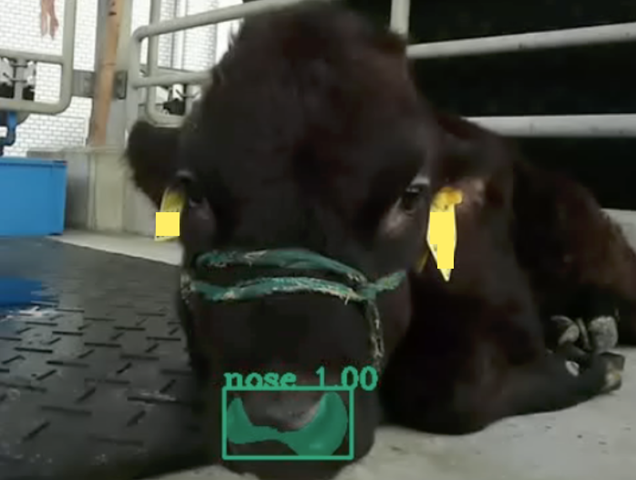
Contactless cattle health monitoring through infrared thermography and deep learning.
Credit: Osaka Metropolitan University
Continuous monitoring of rumination is highly informative for assessing cattle health and welfare. Traditional methods for rumination detection, such as pressure sensors, accelerometers, and acoustic sensors, require direct attachment to animals, which can be costly and stressful for the animals.
Therefore, Osaka Metropolitan University researchers have proposed a non-contact approach for characterizing post-regurgitation deep inhalation (PRDI) in calves using infrared thermography and deep learning-based nostril segmentation. Synchronized RGB and temperature data were collected from 8 calves across 28 imaging sessions, during which rumination was visually confirmed. Deep learning algorithms were used to automatically segment the nostril region in each RGB frame, enabling temperature data extraction from the segmented regions to obtain breathing patterns. Visual observation of the video recordings was used to annotate the timing of regurgitation within the breathing patterns. Breathing patterns were analyzed to distinguish PRDI from other inhalation events not associated with rumination (non-rumination inhalation, NRI), with particular attention to deeper inspiratory minima that occur immediately after regurgitation. Statistical analysis demonstrated that PRDI events exhibit significantly deeper minima compared to NRI.
An optimal threshold for distinguishing PRDI from NRI within the breathing patterns was identified, achieving a balanced accuracy and G-mean of 0.72, with an area under the receiver operating characteristic curve (AUC) of 0.76.
This study was preliminary in nature, largely due to the short recording durations and limited sample size, both of which inherently constrained the robustness and generalizability of the results. Nevertheless, the findings provided clear proof-of-concept evidence that post-regurgitation respiratory features can be detected using a fully non-contact approach.
Paper information
Journal: BMC Veterinary
Title: Non-contact detection of post-regurgitation deep inhalation in calves using infrared thermography and deep learning-based nostril segmentation
DOI: 10.1186/s12917-026-05340-y
Authors: Sueun Kim, Norio Yamagishi, Shingo Ishikawa, and Shinobu Tsuchiaka
Published: 6 February 2026
URL: https://doi.org/10.1186/s12917-026-05340-y
Contact
Kim Su Eun
Graduate School of Veterinary Science
Email: kim73@omu.ac.jp
*Please change [at] to @.
SDGs

