Research News
Jun 9, 2026
- Medicine
Preventing the fall: Assessing fragility fracture risks
Pinpointing associated factors that contribute to injury in older adults
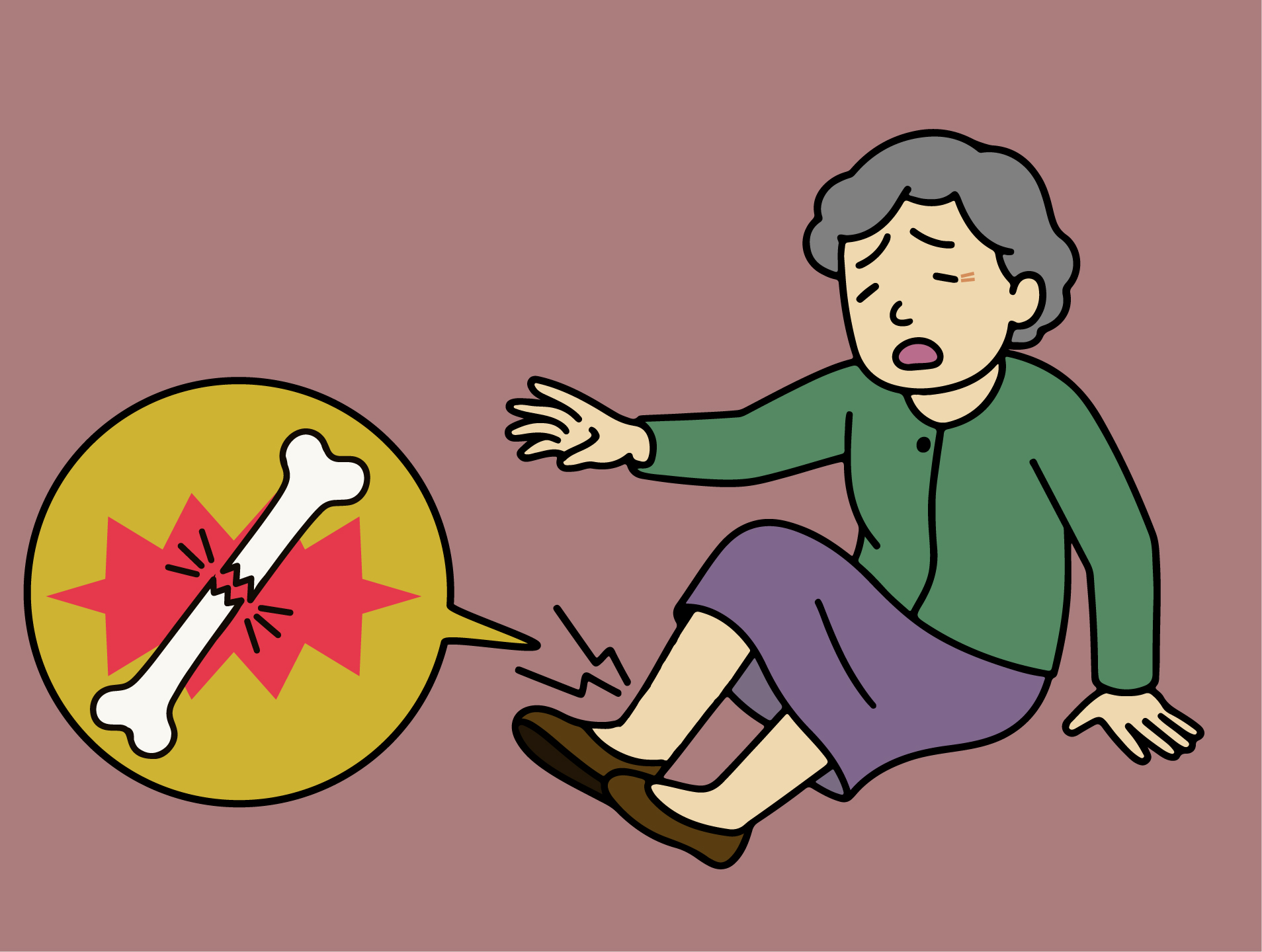
Elder fragility fractures
Frailty and fall risks in older adults are a growing concern.
Credit: Osaka Metropolitan University
With an aging population now the irrefutable reality in Japan, concerns around the health and wellbeing of older adults have come to the forefront of public health dialogues.
Older adults are especially at risk for fragility fractures and falls, which threaten their healthy life expectancy. Although these risks are thought to be influenced by lifestyle factors and medication use, studies that comprehensively evaluate these variables remain limited. Modifiable factors, such as polypharmacy, which is the use of multiple medications at once, and unintentional weight loss are a few such examples that need to be systematically assessed. Further, there is not a clear consensus around physical activity's role in preventing fractures and falls.
To improve this area of geriatric health, a research group led by Dr. Masayoshi Iwamae at Osaka Metropolitan University’s Graduate School of Medicine conducted a cross-sectional analysis to identify factors associated with fragility fractures and falls. Data of 4,967 community-dwelling adults aged 60 years and older in Osaka Prefecture was collected and analyzed from an online survey that covered demographics, a 5-year history of fragility fractures, falls, medication, unintentional weight loss, and physical activity.
In the team’s findings, it was revealed that being female, polypharmacy, a history of falls, and unintentional weight loss were each independently associated with fragility fractures. The associated factors in falls were the use of sleeping medications, polypharmacy, and unintentional weight loss. In contrast, physical activity, a previous subject of debate, was not significantly associated with either fragility fractures or falls.
“These results highlight the importance of comprehensive prevention strategies, including medication optimization and nutritional interventions. Physical activity, meanwhile, should be promoted to improve overall quality of life. This study provides evidence to support practical interventions for community-dwelling older adults,” said Dr. Iwamae.
The findings were published in BMC Geriatrics.
Funding
This research was funded by the Grant Program for the Formation of Collaborative Research Groups provided by Osaka Metropolitan University.
Paper information
Journal: BMC Geriatrics
Title: Lifestyle factors, including physical activity status, associated with fragility fractures and falls: A cross-sectional study
DOI: 10.1186/s12877-026-07344-7
Authors: Masayoshi Iwamae, Koji Tamai, Mitsuhiko Ikebuchi, Shinji Takahashi, Yumi Higuchi, Kazuki Uemura, Masaya Ueda, Kazunobu Okazaki, Hisayo Yokoyama, Haruka Kawabata, Hiroaki Nakamura, and Hidetomi Terai
Published: 24 March 2026
URL: https://doi.org/10.1186/s12877-026-07344-7
Contact
Masayoshi Iwamae
Graduate School of Medicine
Email: m-iwamae[at]omu.ac.jp
*Please change [at] to @.
SDGs
