Research News
Jun 12, 2026
- Veterinary Science
Tracking infectious bacteria from raccoons via rivers to humans with DNA
Genetic, animal, and water samples paint a picture of pathways to human diarrheal disease
A river potentially at risk of raccoon-spread bacterial infection
Raccoons with infectious Escherichia albertii bacterium may be spreading infection by water.
Credit: Osaka Metropolitan University
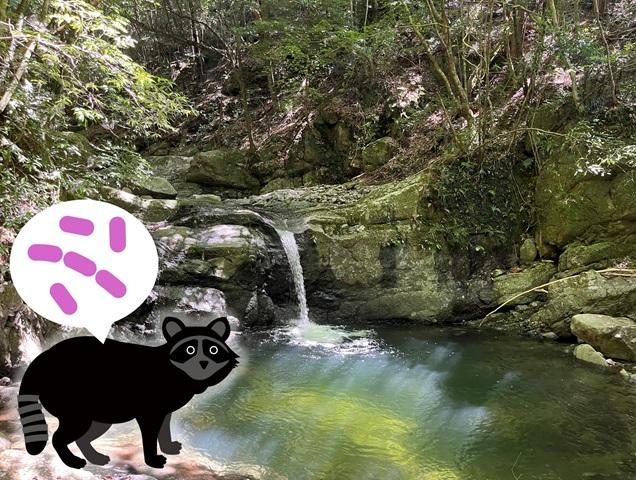
The emerging infectious bacterium Escherichia albertii has caused outbreaks of severe food poisoning and hospitalized people through contaminated water and foods, such as salad ingredients. Now, a new study from Osaka Metropolitan University (OMU) has gathered evidence from river, animal and genetic samples that suggest a pathway by which invasive raccoons (Procyon lotor) transmit infections to humans.
This creates a problem as raccoons thrive everywhere from forests and rivers to farms and dense urban neighborhoods. Recently, the small omnivores have started foraging near people, livestock, and waterways, increasing the risks of their feces contaminating irrigation systems, animal feed, and rivers.
Because raccoons are closely tied to water sources, contaminated water has long been suspected to be behind some human outbreaks. This led a research team headed by Associate Professor Atsushi Hinenoya from the Graduate School of Veterinary Science at OMU to carry out a large-scale survey of wild raccoons and environmental water in Osaka Prefecture, where raccoon populations are particularly high.
They detected the bacterium in 77% of water samples and in six of eight river systems tested. Notably, all the negative samples were collected during winter and early spring, which is a period when the number of raccoons carrying the bacterium typically declines.
Usually, riverborne bacteria accumulate downstream, but the researchers also found E. albertii upstream and near water sources, including areas far from residential districts, farms, and recreational facilities. This strongly suggested that wildlife, rather than human activity, was introducing it into the rivers.
“Overall, these findings suggest that E. albertii is widely distributed in environmental waters,” Professor Hinenoya said. “Much of this contamination was strongly associated with wild animals.”
Supporting this idea, analysis of 122 wild raccoons showed that 56% carried the E. albertii bacterium.
Whole-genome analysis of the samples revealed a mix of bacterial strains, many of which matched those in water samples. This diversity suggested a pathogen that was firmly established in the ecosystem rather than originating from a single outbreak.
A closer look revealed that every sequenced strain carried genes linked to human disease, including factors reported to be found in patients with severe diarrhoea. Some strains were also similar to strains previously isolated from infected patients.
“The key takeaway is that all isolates possessed virulence genes associated with human pathogenicity, and some were closely related to strains derived from human patients,” Professor Hinenoya explained. “These findings are strong indicators that these pose a potential risk to public health.”
The concern is that if E. albertii strains can persist in rivers and wildlife populations, humans may repeatedly encounter them through contaminated food or water. Such environmental circulation could also make outbreaks far more difficult to trace.
The researchers stress that monitoring only human infections is no longer enough and instead advocate a “One Health” approach that treats human health, wildlife, agriculture, and environmental systems as interconnected.
The team now plans to investigate the precise contamination routes linking raccoons, environmental water, agricultural products, and food.
“The approach used in this study can be applied to other zoonotic diseases,” Professor Hinenoya explained. “So, we hope to expand this research toward the development of comprehensive strategies for infectious disease control.”
The findings were published in Applied and Environmental Microbiology.
Funding
- Japan Society for the Promotion of Science 20K06396
- Japan Society for the Promotion of Science 24K09249
Paper information
Journal: Applied and Environmental Microbiology
Title: Integrated study on the occurrence and genomic features of Escherichia albertii in environmental water and raccoons in Japan
DOI: 10.1128/aem.00076-26
Authors: Atsushi Hinenoya, Rin Tagami, Sharda Prasad Awasthi, Bingting Xu, Noritoshi Hatanaka, Shinji Yamasaki
Published: 24 March 2026
URL: https://doi.org/10.1128/aem.00076-26
Contact
Atsushi Hinenoya
Graduate School of Veterinary Science
Email: hinenoya[at]omu.ac.jp
*Please change [at] to @.
SDGs

