Research News
Jun 29, 2026
- Human Life and Ecology
Associations between eye-level streetscape elements, parks, and residents’ daily walking
Eye-level streetscapes
Key streetscape elements were identified to assess park accessibility and daily walking.
Credit: Osaka Metropolitan University
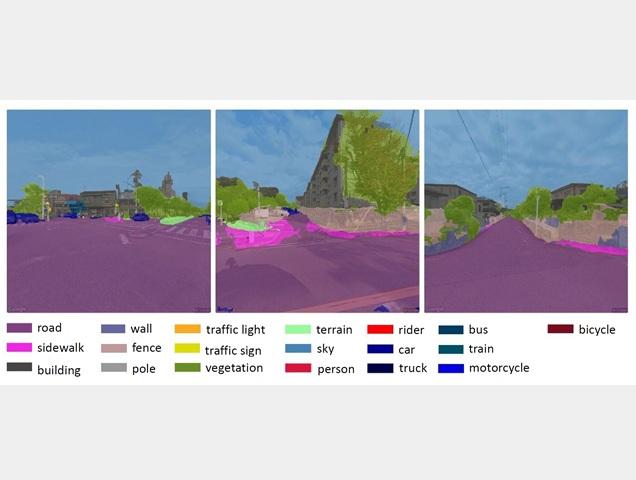
Walking is a common form of physical activity that contributes to better health, and parks are important spatial settings for walking. Street conditions play an important role in park accessibility. Although some studies have incorporated street environments into park accessibility measures, existing studies still focus mainly on macro-scale attributes, with limited attention to micro-scale attributes and their relationship with residents’ actual walking.
Based on existing theoretical foundations of park accessibility and walking, Osaka Metropolitan University researchers incorporated eye-level streetscapes along routes to parks as a complementary dimension of park accessibility, thereby extending the traditional distance-based perspective. Longitudinal step count data were collected from 84 adult participants (mean age: 71.9 years) residing in a suburban municipality in Osaka, Japan, between 2020 and 2024. Generalized linear mixed models were used to examine whether this extended framework was associated with the probability of achieving adequate daily walking (≥5,000 steps/day) in repeated monthly observations, and to identify the key streetscape elements.
The results indicated that, compared with distance alone, incorporating eye-level streetscapes significantly improved the explanatory power of the accessibility framework for adequate daily walking. More poles along routes to parks were associated with higher odds of achieving adequate daily walking, whereas more traffic signs were associated with lower odds. The findings suggest that, beyond distance, eye-level streetscape conditions along routes to parks, particularly more poles (predominantly streetlights in the study area) and fewer traffic signs, are associated with a higher probability of achieving adequate daily walking.
Paper information
Journal: Transportation Research Interdisciplinary Perspectives
Title: Associations Between Eye-Level Streetscape Elements Along the Shortest Route to Parks and Residents’ Daily Walking: Empirical Evidence from Community-Led Walking Promotion Projects
DOI: 10.1016/j.trip.2026.102006
Authors: Xiaorui Wang, Erika Matsumoto, Daisuke Matsushita
Published: 20 April 2026
URL: https://doi.org/10.1016/j.trip.2026.102006
Contact
Daisuke Matsushita
Graduate School of Human Life and Ecology
Email: matsushita[at]omu.ac.jp
*Please change [at] to @.
SDGs
