Research News
Aug 6, 2026
- Human Life and Ecology
Weathering population decline with Smart Decline
Nationwide study in Japan suggests fully remote work and stable long-term care costs can buffer life satisfaction in shrinking small and medium-sized cities
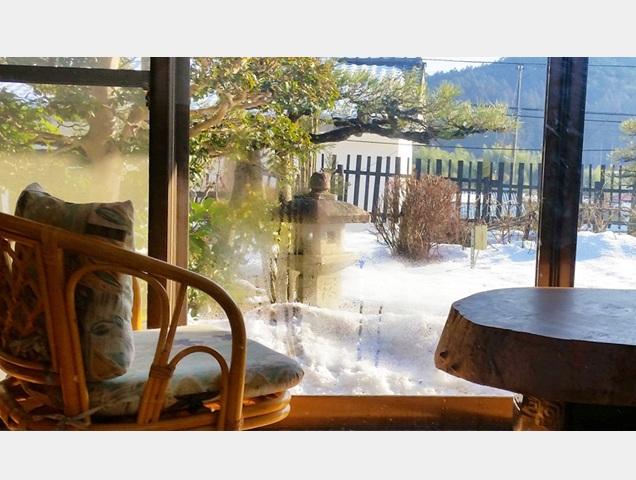
Contextual buffers for well-being in shrinking small and medium-sized cities
Fully remote work becomes a more important buffer for adults’ life satisfaction, while stable long-term care costs become a more important buffer for older adults.
Credit: Osaka Metropolitan University
As populations decline and age across many developed countries, cities are increasingly being forced to ask a difficult question: how can residents maintain well-being when long-term demographic recovery is unlikely? This question is especially urgent in Japan, where the majority of small and medium-sized cities (SMCs) are already experiencing population decline.
Associate Professor Haruka Kato of Osaka Metropolitan University’s Graduate School of Human Life and Ecology examined how city-level population change shapes the relationship between everyday life conditions and residents’ life satisfaction. Using data from Japan’s national 2024 Survey on Satisfaction and Quality of Life, the study analyzed 5,645 residents living in SMCs. The research employed hierarchical linear modeling to evaluate cross-level interactions between city-level population change rates and individual-level life domains, including work–life balance, caregiving support, health, housing, finances, community, and other dimensions of daily life.
The results showed that population decline was modestly associated with lower life satisfaction. More importantly, the analysis identified a contextual buffering pattern where, as population decline became more severe, certain life domains became more important for maintaining life satisfaction. For adults, work-life balance became more strongly associated with life satisfaction in shrinking cities.
A further analysis of work arrangements suggested that fully remote work functioned as a particularly important buffer. In more rapidly shrinking cities, fully remote work was associated with more favorable life satisfaction, suggesting that digital work arrangements may help residents remain connected to broader labor markets even when local employment opportunities are fragile. For older adults, caregiving support became more important as population decline intensified. In particular, satisfaction with long-term care costs was strongly associated with life satisfaction in more rapidly shrinking cities. The results suggest that stable and predictable care costs may serve as financial support and psychological anchors against anxiety about the sustainability of local welfare systems.
“Our study suggests that Smart Decline policies should move beyond a narrow focus on physical right-sizing and compact city strategies,” said Dr. Kato. “Toward Smart Decline, for adults, this may mean investing in digital infrastructure and remote-work environments that expand access to economic opportunities beyond the local labor market. For older adults, it may mean stabilizing long-term care costs and supporting household caregiving arrangements.”
The findings were published in Cities.
Funding
Haruka Kato received funding from the Japan Society for the Promotion of Science (Grant No. 24K17421, 23K26284). The opinions, findings, conclusions, or recommendations expressed in this manuscript are those of the author.
Paper information
Journal: Cities
Title: Well-being amidst population decline: Contextual effects of population change on life satisfaction in shrinking small and medium-sized cities in Japan
DOI: 10.1016/j.cities.2026.107231
Authors: Haruka Kato
Published: 20 May 2026
URL: https://doi.org/10.1016/j.cities.2026.107231
Contact
Haruka Kato
Graduate School of Human Life and Ecology
E-mail: haruka-kato[at]omu.ac.jp
*Please change [at] to @.
SDGs
