Research News
Sep 24, 2026
- Medicine
Community gathering places linked to lower long-term care costs
Participants with mild disabilities had approximately US$1,177 lower annual care cost
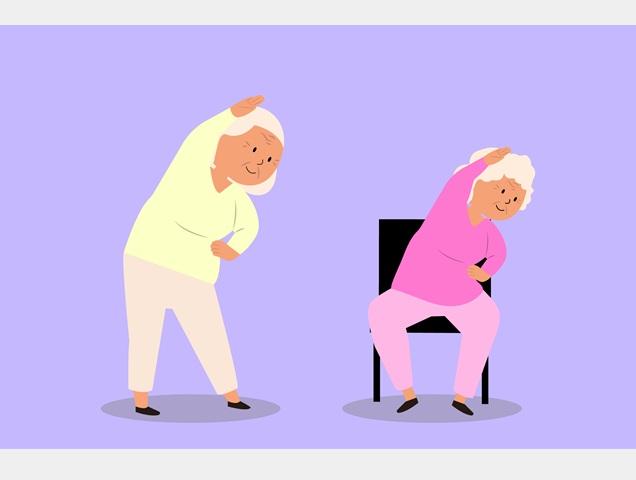
Elderly group exercises
Older adults that need mild support benefited from community gathering spaces.
Credit: Osaka Metropolitan University
Community gathering places are intended to facilitate exercise and social participation for all residents, irrespective of functional decline status. In turn, they provide a foundation for mutual support within the community and act as a key preventive care strategy to extend healthy life expectancy. These places thus promote healthy aging and contribute to mitigating the increasing medical and long-term care (LTC) costs associated with an aging population. However, existing evidence has been derived mainly from studies of functionally independent older adults, leaving a data gap regarding the effects this may have on those already in functional decline.
Noticing this disparity, Associate Professor Kazuki Uemura’s research team at Osaka Metropolitan University’s Graduate School of Rehabilitation Science investigated the association between participation in community gathering places and subsequent long-term care costs among functionally independent older adults and those requiring support or exhibiting mild functional decline. Using the National Health Insurance database known as the Kokuho Database from Toyonaka City, the researchers analyzed data from 9,489 adults aged 75 years and older with and without Long-Term Care Insurance (LTCI) certifications. The team compared LTC costs over a two-year follow-up period between 428 participants and 9,061 non-participants in community gathering places.
The results indicated that, among older adults requiring support or exhibiting mild functional decline, the estimated average monthly LTC cost was US$98.1 lower for participants than for non-participants, indicating a potential annual reduction of approximately US$1,177. In contrast, no statistically significant difference was observed among functionally independent older adults without LTCI certification.
“Our findings suggest that community gathering places are not merely venues for exercise. They may function as valuable community resources that influence patterns of long-term care service utilization among older adults. Further research involving larger populations and longer follow-up periods is needed to validate these findings. Ultimately, this line of research may contribute to the optimization of municipal preventive care strategies and support evidence-based policymaking in aging societies,” said Professor Uemura.
The findings were published in the Journal of the American Medical Directors Association.
Funding
This study was supported by a research grant from Toyonaka City (project number: J241000400).
Paper information
Journal: Journal of the American Medical Directors Association
Title: Participation in Community Gathering Places and Subsequent Care Costs in Older Adults: a 2-Year Follow-Up Study
DOI: 10.1016/j.jamda.2026.106229
Authors: Kazuki Uemura, Yuta Kuroda, Katsura Matsunami, Hiroko Tokuyama, Mami Maekawa, Koichi Endo, and Yuhei Otobe
Published: 2 July 2026
URL: https://doi.org/10.1016/j.jamda.2026.106229
Contact
Kazuki Uemura
Graduate School of Rehabilitation Science
Email: kuemura[at]omu.ac.jp
*Please change [at] to @.
SDGs
