In Focus
May 26, 2026
What kinds of research and education can get us through this age of change? OMU President Hiroyuki Sakuragi asks Professor Shinya Yamanaka, Director Emeritus of Kyoto University’s Center for iPS Cell Research and Application
On September 24, 2025, Osaka Metropolitan University held the opening ceremony celebrating the grand opening of its new campus, Morinomiya Campus. After the ceremony, a commemorative lecture was given by Professor Shinya Yamanaka, a graduate of the former Osaka City University Graduate School of Medicine and currently Director Emeritus of Kyoto University’s Center for iPS Cell Research and Application. Afterward, OMU President Hiroyuki Sakuragi and Professor Yamanaka conducted a dialog in which they discussed approaches to research and the future of science and education.
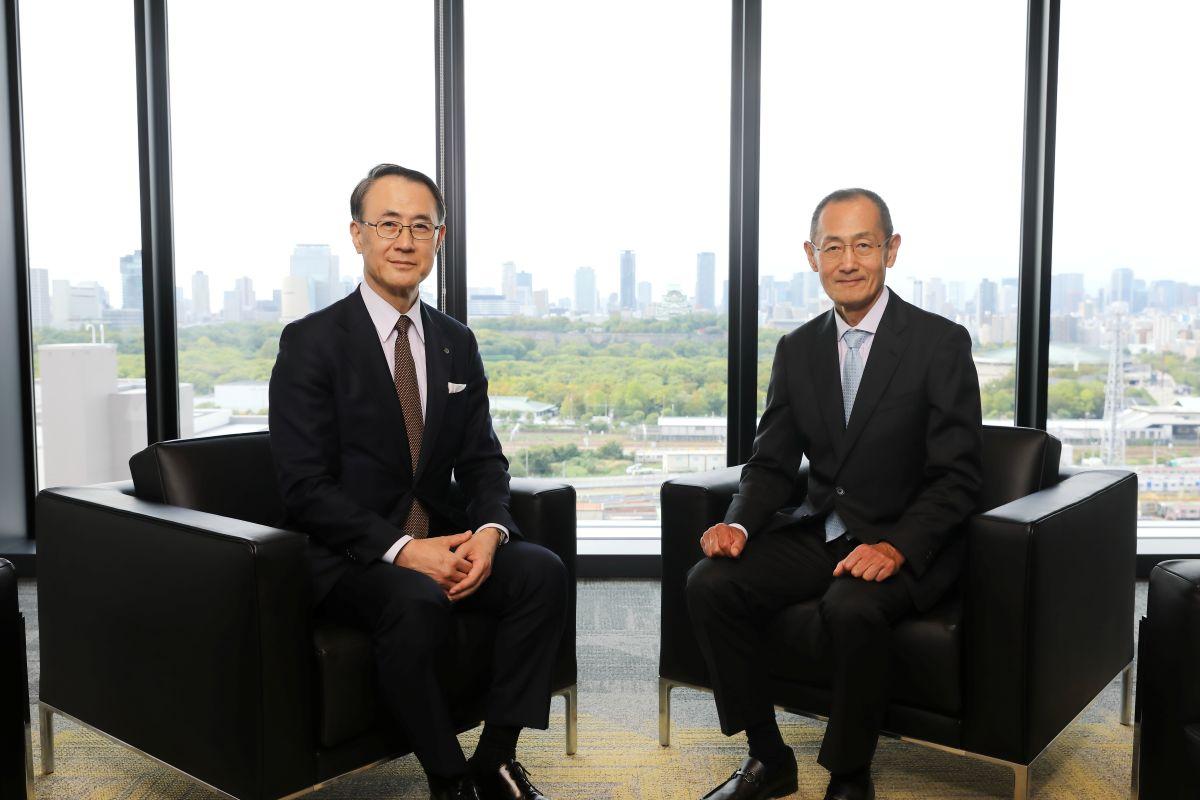
From left: President Hiroyuki Sakuragi and Professor Shinya Yamanaka
Research needs to be supported by a clear vision
Sakuragi Thank you for your insightful talk today. One of the points that particularly struck me was your emphasis on the importance of a vision and making this vision crystal clear to young researchers and students.
Yamanaka Thirty years or so ago, when I was studying in the U.S., my mentor told me that for a researcher, the most important thing is to have a vision and to work hard. I’ve kept those words close to my heart ever since, and always try to keep in mind my own vision: finding cures for diseases through research. If you’re always worrying about what’s right in front of you, it’s easy to forget the essence of what you’re doing. Your vision is a really important means of never forgetting why it is you’re doing this work. In research, there are many times when things do not go as planned, and it may take twenty or thirty years to produce visible results, so it can be really hard to keep yourself motivated. What can support you through such times is the vision of where you hope all your hard work will take you. This is why it is also important to share that vision with the researchers and students who are working with you on your research.
Sakuragi Professor Yamanaka, you have an ambitious but simple goal in your work: to help people. Listening to your talk, I felt that it is important in life to never lose sight of such high aspirations. Another point that impressed me in your speech was the respect you have not only for researchers, but also for the research assistants and many others who support your research.
Yamanaka When I got back to Japan after studying in the U.S., I felt like I was being swamped with paperwork at my Japanese workplace. In the U.S., we had a large staff, including secretaries and research assistants, who supported us so that we researchers could concentrate on our research. What’s more, the members of this support staff were able to work for years and build careers in this area. In the end, it’s the researchers who write the articles that attract attention, but I believe that taking care of the staff that supports your work is one way to make research go better.
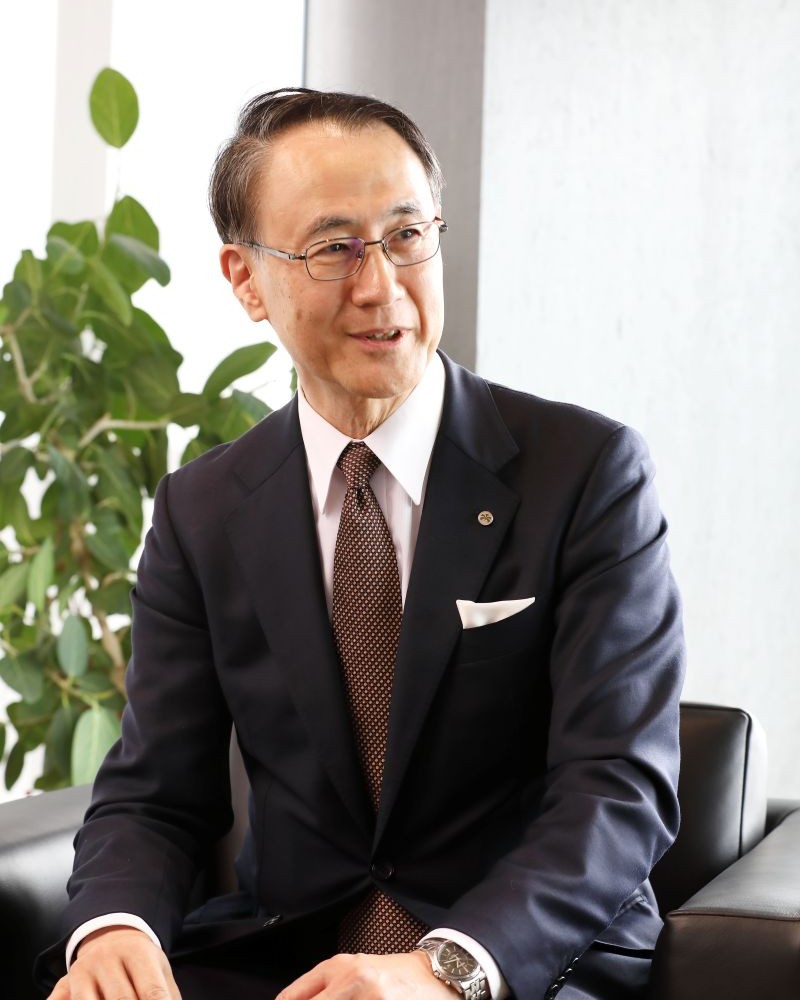
President Sakuragi
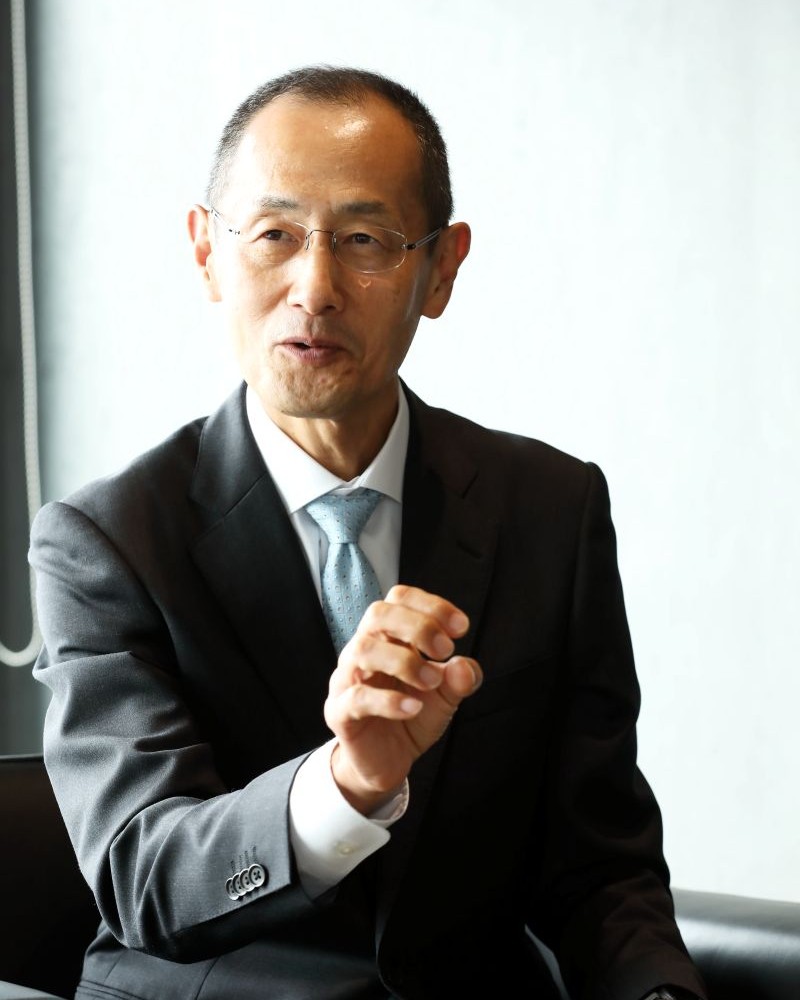
Professor Yamanaka
Professor Yamanaka’s Years at the OCU Graduate School: Learning the Basics of Research and Opening the Door to the World
Sakuragi When you think back to your time in the Graduate School of Osaka City University, can you recall any especially memorable events?
Yamanaka In grad school, I learned the basics of research in Professor Kenjiro Yamamoto’s pharmacology section. The person who actually taught me was Professor Katsuyuki Miura. I will never forget that one of the first things Professor Miura told me was that even if your research wasn’t all that great, if you published an article about it in English, people around the world would read it. “We’re competing with the world,” he told me. Until then, I’d had only a narrow outlook on life: I’d never really been aware of anything outside my immediate surroundings in Japan. So, this sudden talk of the world astounded me. Yet in fact, a great many of the students ahead of me in school went on to study abroad after grad school, so I naturally began to think that I should, too. Bringing the world into my sights was a major transformation for me.
I also learned the basics of experimentation here. I remember being told that trying to save one hour can lead to the loss of a whole week: when you think something is too much trouble and don’t do it properly, you can end up having to completely redo it and waste a whole week’s work. I was also taught to initiate new projects rather than trying to adapt others’ work. These were among the many important lessons I learned here.
Sakuragi Many university researchers are also active abroad, doing a wide range of research. Meeting professors like that made me feel like a window on the world suddenly opened up to me.
Yamanaka For example, I never took English seriously before starting university; I only studied it in order to pass entrance exams. I actually wondered why I needed to study it. Yet when I was in the lab at university, we occasionally got foreign visitors and had to explain our research in English. At times like that, I regretted not having studied it more. All sorts of people from all over the world visit the university. If students have a chance to meet such visitors from an early stage in their studies, it can lead them to turn their eyes to the outside world.
Sakuragi Even in very limited fields of research, feeling truly connected to the world’s leading experts can be a real thrill for students. These days, the number of students who study abroad is declining, but there are still many professors who have overseas ties. I’d like to make sure that students learn more about the research and activities such professors are engaged in.
What we need in the coming years is the ability to live flexibly
Sakuragi OMU is striving to promote internationalization, so I’d like to ask you what you think is needed to achieve true internationalization and international competence.
Yamanaka These days, technology has advanced dramatically, allowing online meetings and automatic translation using AI, so some people may wonder if we really need to go abroad or speak English. Yet in my personal experience, I feel that there is a huge difference between online meetings and face-to-face encounters in terms of the amount of information and learning you can glean. While it is possible to come to an understanding using automatic translation technology, the difference in density of the conversations between that and directly meeting others is like night and day. Teenagers can learn languages relatively easily and young people generally have time to travel abroad, so I sincerely hope today’s youth will take advantage of their college years to learn foreign languages and come in contact with other cultures.
Sakuragi We live in an era of rapid change in which technology is advancing, values are shifting and many other aspects of life are changing rapidly. Today’s students are being buffeted about by these changes. How do you think they should cope with all this?
Yamanaka A few years ago, when generative AI first appeared, it made so many errors that I really wondered if it would ever be of real use. Yet today, I use it so much that I wonder how I was ever able to do research without it. I’m envious of the students who will live on into the future, but I also think they will have a tough time.
We have no way of predicting what kind of work will be needed from now on. And in this kind of world, what students will need to learn may well change, too. For instance, the demand for technical skills such as programming may give way to demand for interpersonal skills such as communication and team building. Darwin once said, it is not the strongest of the species that survives, nor the most intelligent, it is the one the most adaptable to change; that’s exactly the kind of age we’re living in. It will be vital to live flexibly no matter how the world changes. Even more than before, what will be important, I believe, for college students is their attitude toward learning and life during the first- and second-year before they delve into specialized studies.
The Morinomiya Campus as a place for interaction between differing majors
Sakuragi The Morinomiya Campus opened in the fourth year after Osaka Metropolitan University was founded. What expectations do you have of the students? What kind of message would you like to send to them?
Yamanaka Little conversations with people from different fields can contain hints for research. The merger of Osaka City University and Osaka Prefecture University has brought together a range of faculties, making it possible to learn not only from professors in your own department and major, but also from professors in other fields; it also enables students from different departments to become friends. I hope students will take advantage of this opportunity and act with a broader perspective. Moreover, since Morinomiya is in central Osaka, I imagine that it will attract a wide range of people and give birth to something new.
Sakuragi First-year students from all faculties and majors will begin their college years on the Morinomiya Campus.
Yamanaka People often maintain the friendships they make at college for many years. I expect that friendships forged on this campus will be maintained even after the friends go on to study at different campuses according to their faculty. If students are not conscious of the opportunity right in front of them, their first year may go by in a flash. I therefore hope students will try to forge friendships with a wide range of people from different faculties and majors to nurture a wide perspective during their first year at the university. The world may change, but the importance of personal connections will not. Such ties may help out in their work in the future. Also, I recommend that students make friends not just with Japanese but with people from around the world to help them learn to understand a wide range of values while they are young.
Sakuragi As I listened to you, Professor Yamanaka, I felt the significance of valuing communication while never losing sight of the essence of the path you should take, and also always keeping your vision in mind. In addition, I felt a renewed sense of the importance of keeping an eye on the future not only of Japan, but also humanity and the world, and taking the initiative in everything you engage with. Thank you so much for today.
Profiles
Shinya Yamanaka
Director Emeritus and Professor, Center for iPS Cell Research and Application (CiRA), Kyoto University. After graduating from the Kobe University School of Medicine, Professor Yamanaka earned his Ph.D. from the Osaka City University Graduate School of Medicine. He subsequently served as a postdoctoral fellow at the Gladstone Institutes, associate professor at the Nara Institute of Science and Technology, and other positions before becoming a professor at Kyoto University in 2004. In 2010, he became the Director of CiRA, serving in that post until 2022, when he took up his current position as CiRA Director Emeritus. In 2012 Professor Yamanaka won a joint Nobel Prize in Physiology or Medicine with Sir John B. Gurdon “for the discovery that mature cells can be reprogrammed to become pluripotent.” He currently is engaged in basic research at CiRA with the goal of opening up new areas of research in the life sciences.
Hiroyuki Sakuragi
President of Osaka Metropolitan University, Osaka City University, and Osaka Prefecture University. Vice Chairperson of University Public Corporation Osaka. Ph.D. in Physics with a major in nuclear physics. After graduating from the Department of Physics, School of Science, Kyushu University, he went on to earn his master’s degree and doctorate in physics from the graduate school of the same university. He served as a postdoctoral research fellow in the Center for Nuclear Study of the University of Tokyo and other positions before coming to Osaka City University as a research associate in the Department of Physics in 1987. He became the Dean of the Graduate School of Science/Faculty of Science and later, Vice President/Executive Director of Osaka City University, Vice President of Osaka Metropolitan University before assuming his current positions in April 2025.
Related Information
Morinomiya Campus Officially Opens
Contact
*Please change [at] to @.