Research News
Aug 6, 2026
New research findings in functional wx ae (WE Rice)
Anticipated Applications as a New Food Ingredient and in Product Development
A research group led by Specially Appointed Professor Shinichi Kitamura and Specially Appointed Associate Professor Hatsuho Takemitsu of Endowed Course of Laboratory of Food Process Initiative, Osaka Metropolitan University, in collaboration with JA Kita-Osaka, has developed wx ae (WE Rice) through many years of joint research.
wx ae combines two genetic traits found in rice: waxy (wx), which produces almost no amylose in the starch, and amylose extender (ae), which gives rise to a distinctive starch structure. Its consumer name, WE Rice, comes from the initials of these two traits — the “W” of waxy and the “E” of amylose extender. wx ae (WE Rice) was developed by crossing existing rice lines through conventional breeding methods and selecting offspring with the desired traits; it does not involve genetic modification or genome editing technologies, and, like ordinary rice, can be used as a food ingredient in the usual way.
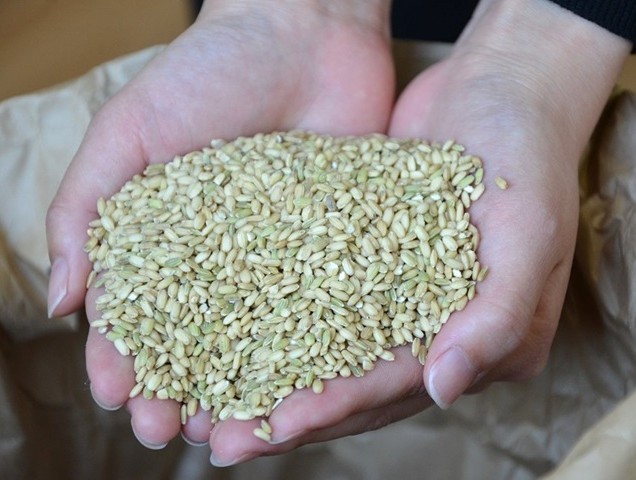
wx ae (WE Rice) accumulates resistant starch that is difficult to digest, and contains about seven times more dietary fiber than brown rice. It is also rich in γ-oryzanol and GABA (about five times more than brown rice), and is classified as a low-GI food; its effects on lipid metabolism are also under investigation. Recent studies on wx ae (WE Rice) have been published in two international peer-reviewed journals: the Journal of Food Science and Technology and the Journal of Food Science.
Research Details
Study 1:
Revealing the Distinctive Aroma Created by Roasting wx ae (WE Rice)
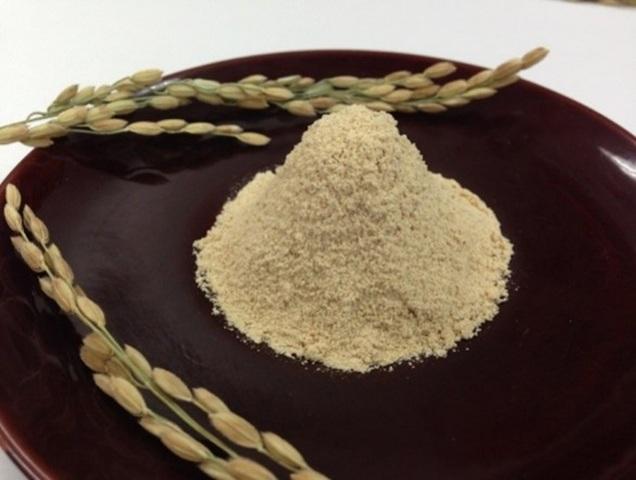
A research group led by Specially Appointed Associate Professor Hatsuho Takemitsu investigated pyrazines, the aroma compounds generated during the roasting of wx ae (WERice), using comprehensive two-dimensional gas chromatography1 and time-of-flight mass spectrometry2 to conduct a detailed analysis of their composition and formation characteristics.
The study identified more than 1,000 volatile compounds in roasted wx ae (WE Rice), including over 100 pyrazine compounds. Among these, 12 pyrazines were not detected in the conventional rice variety used for comparison, suggesting that they may contribute to the unique aroma profile of wx ae (WE Rice).
Paper information
Journal: Journal of Food Science and Technology
Title: Comprehensive analysis of roasting-induced pyrazines in wx ae brown rice revealed by GC × GC-TOF–MS
Authors: Hatsuho Takemitsu, Miyako Kotaniguchi, Fumie Kabashima, Shinichi Kitamura
Published: 15 April 2026
URL: https://doi.org/10.1007/s13197-026-06657-0
Funding
This study was partially supported by the Promotion Project of Knowledge-based Industrial Clustering of Okinawa prefecture, JSPS KAKENHI Grant Number 24K16576, and Sugiyama Chemical and Industrial Laboratory.
1 Two-dimensional gas chromatography: An analytical method that separates the many volatile compounds (such as odor components) in a sample in two stages, making it easier to resolve complex mixtures and enabling more precise analysis.
2 Time-of-flight mass spectrometry: An analytical method that ionizes molecules and measures the time they take to reach the detector (their “time of flight”) to determine molecular mass and identify compounds.
3 Maillard reaction: A reaction between sugars and amino acids induced by heating that produces the characteristic aroma and browning in food — the source of the flavor in baked bread crusts, coffee, and roasted foods.
Study 2:
Food Processing Alters the Gut Health Benefits of WE Rice
A collaborative research team led by Professor Kenji Matsumoto of Ishikawa Prefectural University and Specially Appointed Professor Shinichi Kitamura of OMU investigated the effects of wx ae (WE Rice) on intestinal health.
Mice were fed either roasted or steamed wx ae (WE Rice) for eight weeks. Both forms increased levels of immunoglobulin A (IgA), which supports intestinal immunity, and mucin, a key component of the protective mucus layer in the gut. Roasted WE Rice showed a stronger effect on IgA production, whereas steamed wx ae (WE Rice) was more effective at increasing mucin, likely due to differences in how processing affects starch properties and the gut microbiota.
These findings suggest that the health benefits of the same food can vary depending on the processing method and may contribute to the development of new functional foods designed to support intestinal health.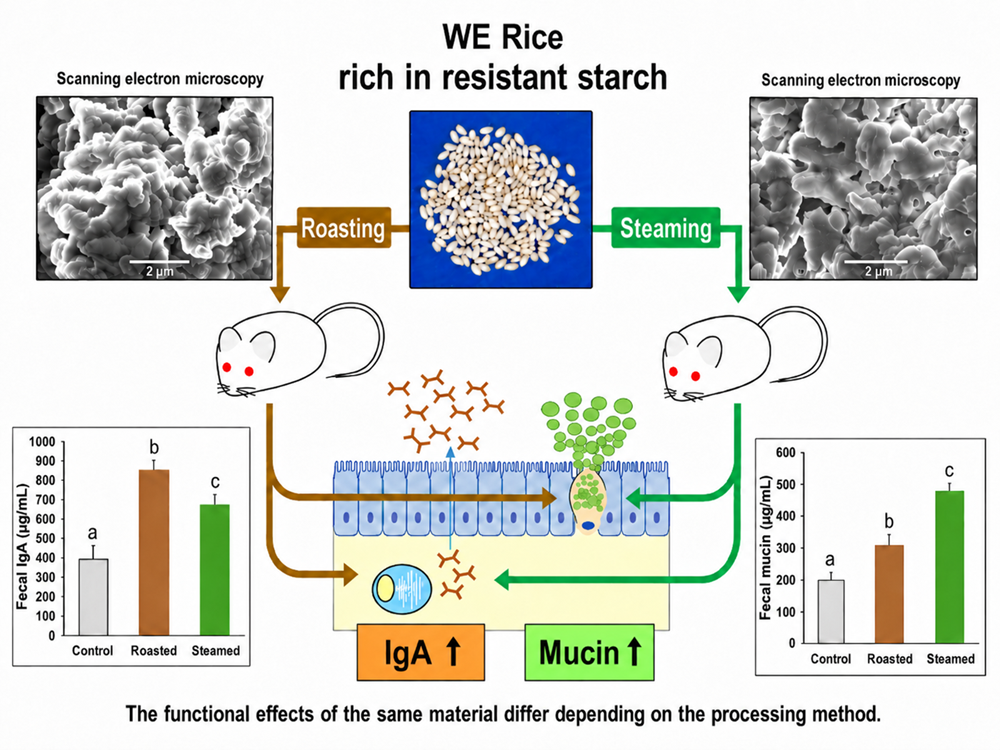
Paper information
Journal: Journal of Food Science
Title: Differential Effects of Roasting and Steaming of Resistant Starch-Rich WE Rice on Murine Intestinal Immune and Barrier Functions
Authors: Sayaka Matsumoto, Ayaka Noguchi, Shinichi Kitamura, Kenji Matsumoto
Published: 12 May 2026
URL: https://doi.org/10.1111/1750-3841.71113
Related Information
https://www.omu.ac.jp/orp/a_fpi/
Contact
Laboratory of Food Process Initiative, Osaka Metropolitan University
Hatsuho Takemitsu
Email: takemitsu[at]omu.ac.jp
*Please change [at] to @.
SDGs


